

In a blow to the UK’s efforts to widen entry routes into employment, new research shows that a third of young people see apprenticeships as a viable alternative to university, yet apprenticeship job postings have declined for two consecutive years.
The findings come from global hiring platform Indeed, which commissioned polling firm Censuswide to survey over 2,000 young people and employers in the UK. It found that 33 percent of those aged 16 to 19 believed apprenticeships were a viable way to start a career, making them the second most popular route after university. Among employers, 84 percent said they recognised the value of apprenticeships or vocational training when hiring.
Despite the interest, the availability of positions is shrinking. Indeed’s own job posting data shows that apprenticeship listings fell by 17 percent between July 2023 and July 2024, followed by a further 9 percent drop in the year to July 2025. The trend suggests an increasing mismatch between what young people want and what the job market currently offers.
Widening access, but narrowing opportunities
Apprenticeships have long been promoted as a key route into employment, particularly for those who do not wish to pursue university education or who are already facing financial pressures. For young people not in education, employment or training (NEET), and for those worried about student debt, hands-on work-based learning offers a practical and often more affordable alternative.
 |
Get our essential weekday HR news and updates.
|


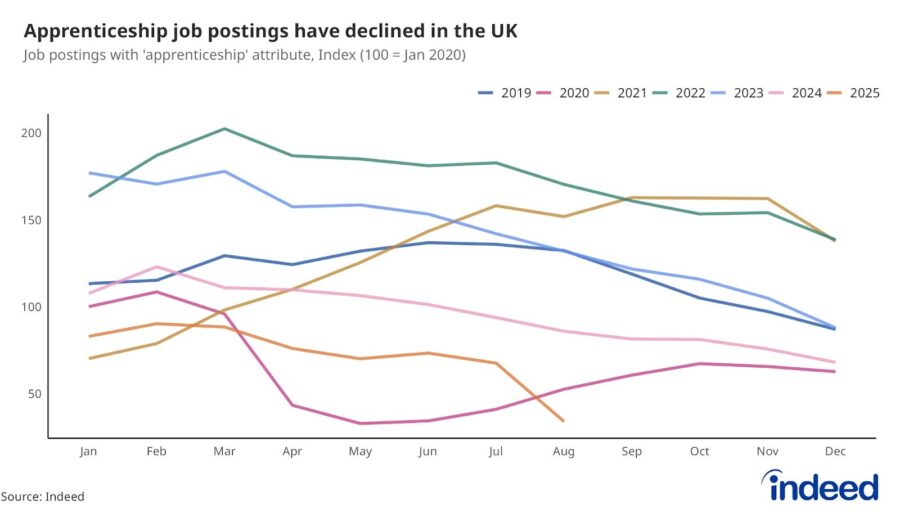
But the falling number of apprenticeship listings is likely to hinder these goals, with fewer roles available just as more young people are beginning to view them as a viable choice. The decline may in part be linked to government funding changes, including the planned withdrawal of support for degree-level apprenticeships for those aged 22 and over from January 2026.
Meanwhile, other policy shifts — such as the announcement of 120,000 new training places for young people — may be diverting attention away from apprenticeships and towards short-term or non-vocational programmes, further affecting demand and perception.
Employers value them, but concerns remain
Employers surveyed acknowledged the usefulness of apprenticeships, especially when looking to hire early-career staff. Yet many also expressed concerns about the preparedness of entry-level candidates. Forty-five percent cited a lack of experience as a major challenge, while 39 percent pointed to gaps in work readiness and practical skills.
Matt Burney, senior strategic advisor at Indeed, said apprenticeships continued to play a vital role, particularly for those taking a non-academic path. But he noted that other options — such as internships and entry-level roles — also have value.
“Apprenticeships are a vital pathway for young people, particularly for those who want to start earning straight after school or take a more hands-on, non-academic route,” he said.
“But they’re not the only option. Jobseekers can also build experience and confidence through long-term internships, graduate placements and entry-level roles that don’t require prior experience. All of these can serve as valuable stepping stones into the workforce and future career growth.”
Indeed’s hiring data shows some signs of progress in making early careers more accessible. Just 14 percent of job ads on the platform now specify a formal education requirement, and only 3.7 percent ask for a university degree, making more positions open to candidates from a range of backgrounds.
Barriers to entry — and how to overcome them
Despite a reduction in postings, young people are still being encouraged to apply for apprenticeship and training opportunities where they can. Burney offered a set of practical tips for improving applications to entry-level roles, urging applicants to focus on preparation and personalisation.
His advice includes researching the employer and tailoring the application, polishing a CV to reflect relevant skills and interests and using real-life examples — such as school projects, volunteering or hobbies — to demonstrate motivation. He also advised candidates to include a cover letter even when optional, and to double-check for spelling or grammar issues before submitting.
The importance of preparation is echoed by career development organisations, which warn that employers can receive hundreds of applications for a single apprenticeship role, especially in high-demand sectors such as tech, finance and healthcare.
Calls for reform
While apprenticeships are widely praised for offering career pathways to young people, experts say the drop in availability points to a need for greater support, funding and coordination from government and employers alike.
Without a broader commitment to expanding access, they caution, the UK risks missing out on a generation of skilled workers eager to take a different route into the job market.
The research adds to growing calls for reform in the apprenticeship system, including simplifying application processes, widening eligibility criteria and offering clearer communication to young people about available opportunities.


William Furney is a Managing Editor at Black and White Trading Ltd based in Kingston upon Hull, UK. He is a prolific author and contributor at Workplace Wellbeing Professional, with over 127 published posts covering HR, employee engagement, and workplace wellbeing topics. His writing focuses on contemporary employment issues including pension schemes, employee health, financial struggles affecting workers, and broader workplace trends.
- William Furney

- William Furney

- William Furney

- William Furney