


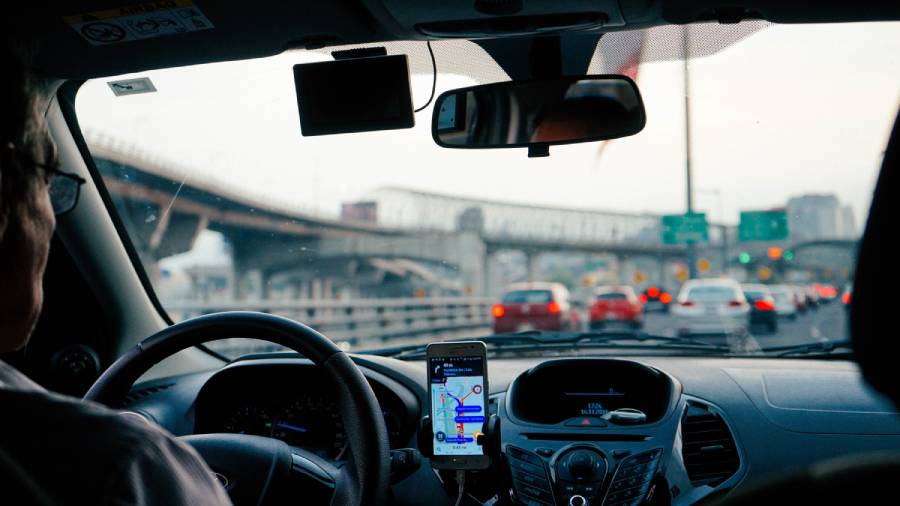

The UK Supreme Court has declared that Uber, a ride hailing service, must treat their drivers as workers as opposed to self-employed individuals.
This decision comes after Uber appealed a ruling by an employment tribunal in 2016 which also sided with the drivers, classing them as workers.
This means that drivers will be entitled to key rights under their new employment status such as minimum wage, rest breaks and holiday pay.
Prior to this, drivers were classified as self-employed, ultimately leaving drivers with minimum protections at work.
 |
Get our essential weekday HR news and updates.
|

This has been hailed as a “landmark case” and could be set to have further implications for the gig economy in general.
As part of this, Uber is likely to have reduced flexible arrangements and have to pay out higher sums to continue operating.
Yaseen Aslam, President of the App Drivers and Couriers Union (ADCU), who initially brought the court case against the company in 2016, stated that he hoped this would “bring relief to so many workers in the gig economy who so desperately need it”.
Mr. Aslam further criticised the Government for pledging to review the gig economy and consequently, doing “nothing to help” the workers. He expressed his hope that, in the future, the Government would “choose to carry out its duty to enforce the law and protect the most vulnerable from exploitation”.
Alan Lewis, Partner at Constantine Law, reflected on the wider implications this case could have on both the gig economy and Uber as a company:
Besides a potential cost to Uber which it is estimated could easily top £100million, this decision will have huge implications for the rights of what we estimate to be more than 5 million UK gig economy workers.
It adds to the weight of judicial authority, building on cases such as Autoclenz and Pimlico Plumbers, that has emphasised the need to rely less on the written contractual terms and more on what happens in reality when considering questions such as: Who controls what goes on? Who takes the financial risk? Who supplies the equipment required to perform the tasks? Is there an unfettered right for the individual to appoint a substitute to carry out the work?
Michelle Hobbs, employment law expert at Stevens & Bolton LLP, analysed what this means for the Uber drivers:
Now, Uber drivers really are in the driving seat and getting paid for it, as the Supreme Court has held that they are entitled to national minimum wage from the moment they switch on the app and are available to take passengers in their area, even if they are not actually at the wheel! For the estimated 5 million people who work in the UK gig economy, today’s decision is a steer in the right direction and towards better workplace protections.
What’s more, with their new-found status, these drivers now have the right to bring discrimination claims against their multinational employer. Uber would therefore be wise to review all its practices and ensure there are not grounds for additional costly court cases!


Monica Sharma is an English Literature graduate from the University of Warwick. As Editor for HRreview, her particular interests in HR include issues concerning diversity, employment law and wellbeing in the workplace. Alongside this, she has written for student publications in both England and Canada. Monica has also presented her academic work concerning the relationship between legal systems, sexual harassment and racism at a university conference at the University of Western Ontario, Canada.
- Monica Sharma

- Monica Sharma

- Monica Sharma

- Monica Sharma



