<

!Google ads have two elements of code. This is the 'header' code. There will be another short tag of code that is placed whereever you want the ads to appear. These tags are generated in the Google DFP ad manager. Go to Ad Units = Tags. If you update the code, you need to replace both elements.> <! Prime Home Page Banner (usually shows to right of logo) It's managed in the Extra Theme Options section*> <! 728x90_1_home_hrreview - This can be turned off if needed - it shows at the top of the content, but under the header menu. It's managed in the Extra Theme Options section * > <! 728x90_2_home_hrreview - shows in the main homepage content section. Might be 1st or 2nd ad depending if the one above is turned off. Managed from the home page layout* > <! 728x90_3_home_hrreview - shows in the main homepage content section. Might be 2nd or 3rd ad depending if the one above is turned off. Managed from the home page layout* > <! Footer - 970x250_large_footerboard_hrreview. It's managed in the Extra Theme Options section* > <! MPU1 - It's managed in the Widgets-sidebar section* > <! MPU2 - It's managed in the Widgets-sidebar section* > <! MPU - It's managed in the Widgets-sidebar section3* > <! MPU4 - It's managed in the Widgets-sidebar section* > <! Sidebar_large_1 - It's managed in the Widgets-sidebar section* > <! Sidebar_large_2 - It's managed in the Widgets-sidebar section* > <! Sidebar_large_3 - It's managed in the Widgets-sidebar section* > <! Sidebar_large_4 - It's managed in the Widgets-sidebar section* > <! Sidebar_large_5 are not currently being used - It's managed in the Widgets-sidebar section* > <! Bombora simple version of script - not inlcuding Google Analytics code* >

Labour resists union push for four-day work week

-

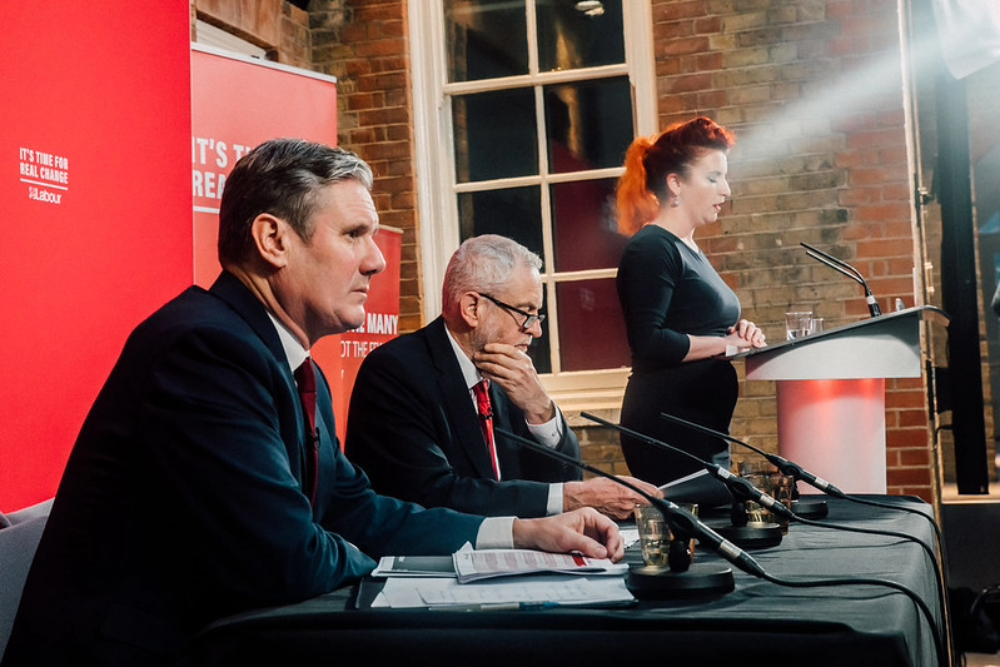
Labour has rejected union demands to endorse a four-day work week as part of its election platform, maintaining that businesses should individually decide on working hours.

Despite mounting pressure, the party insists it will not revive the policy from Jeremy Corbyn’s leadership era.

A senior Labour adviser clarified, “There are no plans to implement a four-day week. It’s a decision for individual businesses. It’s not in any conversations I’ve had or in any manifesto-level discussions.”

During Corbyn’s leadership, reducing the work week to 32 hours within a decade was a key policy, with former Shadow Chancellor John McDonnell promising in 2019 to cut working hours, citing the long hours worked by Britons compared to other Europeans.

Current Labour leader Sir Keir Starmer has distanced the party from this policy, focusing instead on wealth creation. He emphasised his stance during the campaign, saying he would not be “deflected” from this goal.

Some unions are disappointed

Labour’s stance has disappointed some unions, notably Unison, which has heavily funded the party and recently called for the right to a four-day work week without pay cuts. Unison, with over 1.3 million members, represents numerous essential public service workers, including those in the NHS and local government.

Labour has, however, shown support for businesses that voluntarily adopt a shorter work week. Deputy leader Angela Rayner encouraged bosses to consider results from a 2022 pilot, where 61 businesses and over 3,000 employees trialed a four-day week, leading to a 65 percent percent reduction in sick days and increased revenue.

Despite support from some unions and business leaders, including those who penned a letter urging a shift to shorter hours, Labour’s largest backer, Unite, prioritises pay over a reduced work week. The ongoing debate reflects the broader tension between Labour’s traditional union supporters and its current economic strategy.

A spokesperson for the 4 Day Week Campaign argued that a four-day week would benefit many, especially disabled individuals and caregivers, and could improve NHS job recruitment and retention. However, Labour remains steadfast in its current approach, focusing on broader economic issues as the election approaches.

Amelia Brand is the Editor for HRreview, and host of the HR in Review podcast series. With a Master’s degree in Legal and Political Theory, her particular interests within HR include employment law, DE&I, and wellbeing within the workplace. Prior to working with HRreview, Amelia was Sub-Editor of a magazine, and Editor of the Environmental Justice Project at University College London, writing and overseeing articles into UCL’s weekly newsletter. Her previous academic work has focused on philosophy, politics and law, with a special focus on how artificial intelligence will feature in the future.

Latest news

Turning Workforce Data into Real Insight: A practical session for HR leaders

HR teams are being asked to deliver greater impact with fewer resources. This practical session is designed to help you move beyond instinct and start using workforce data to make faster, smarter decisions that drive real business results.

Bethany Cann of Specsavers

A working day balancing early talent strategy, university partnerships and family life at the international opticians retailer.

Workplace silence leaving staff afraid to raise mistakes

Almost half of UK workers feel unable to raise concerns or mistakes at work, with new research warning that workplace silence is damaging productivity.

Managers’ biggest fears? ‘Confrontation and redundancies’

Survey of UK managers reveals fear of confrontation and redundancies, with many lacking training to handle difficult workplace situations.
- Advertisement -

Mike Bond: Redefining talent – and prioritising the creative mindset

Not too long ago, the most prized CVs boasted MBAs, consulting pedigrees and an impressive record of traditional experience. Now, things are different.

UK loses ground in global remote work rankings

Connectivity gaps across the UK risk weakening the country’s appeal to remote workers and internationally mobile talent.

Must read

Bernard Marr: How data is changing the way we work

No industry is unaffected by the wave of change...

Jessica Pryce-Jones & Julia Lindsay: Ten top tips for running successful meetings

We’ve all been there. Stuck in a meeting that...
- Advertisement -

You might also likeRELATED
Recommended to you

Exit mobile version



