<

!Google ads have two elements of code. This is the 'header' code. There will be another short tag of code that is placed whereever you want the ads to appear. These tags are generated in the Google DFP ad manager. Go to Ad Units = Tags. If you update the code, you need to replace both elements.> <! Prime Home Page Banner (usually shows to right of logo) It's managed in the Extra Theme Options section*> <! 728x90_1_home_hrreview - This can be turned off if needed - it shows at the top of the content, but under the header menu. It's managed in the Extra Theme Options section * > <! 728x90_2_home_hrreview - shows in the main homepage content section. Might be 1st or 2nd ad depending if the one above is turned off. Managed from the home page layout* > <! 728x90_3_home_hrreview - shows in the main homepage content section. Might be 2nd or 3rd ad depending if the one above is turned off. Managed from the home page layout* > <! Footer - 970x250_large_footerboard_hrreview. It's managed in the Extra Theme Options section* > <! MPU1 - It's managed in the Widgets-sidebar section* > <! MPU2 - It's managed in the Widgets-sidebar section* > <! MPU - It's managed in the Widgets-sidebar section3* > <! MPU4 - It's managed in the Widgets-sidebar section* > <! Sidebar_large_1 - It's managed in the Widgets-sidebar section* > <! Sidebar_large_2 - It's managed in the Widgets-sidebar section* > <! Sidebar_large_3 - It's managed in the Widgets-sidebar section* > <! Sidebar_large_4 - It's managed in the Widgets-sidebar section* > <! Sidebar_large_5 are not currently being used - It's managed in the Widgets-sidebar section* > <! Bombora simple version of script - not inlcuding Google Analytics code* >

Flexible working impacts railway season ticket sales

-

Flexible season tickets required as rail sales plummet

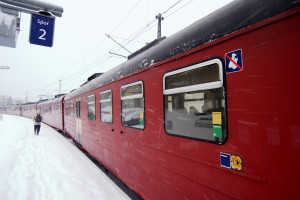
The rise of flexible working has been attributed to season ticket purchases decreasing, which have now dropped for the third consecutive year. 

Figures from the Office for Rail and Road (ORR) show that season ticket purchases between April and June this year fell by 5 per cent, 1.7 per cent in 2018 and 11 per cent in 2017.

The number of journeys taken using season tickets have fallen by 16.8 per cent during the last three years.

Jon Boys, labour economist at the CIPD believes changes should be made to reflect modern working practices. However, he did admit that certain factors are beyond employers’ control. Mr Boys said:

Essentially, people who work part time are being punished because they can’t get value for money out of a season ticket that’s based on five days a week.

Unfortunately, there are some big macro trends that are beyond employers’ control. We see that commuting times are increasing, there’s a housing crisis and people have to live further away from work.

All you can really do is be aware of those factors. Everyone’s different – they have different distances to travel and different responsibilities outside work. It’s about having empathy and a healthy, flexible working system that allows people to balance their needs outside and inside work.

Mr Boys also added that the majority of part-time workers who are women are disproportionally affected by this situation.

Robert Nisbet, director of national and regions at the Rail Delivery Group, which represent Britain’s rail providers said:

As working patterns change, many commuters are realising that they are being held back by an outdated, rigid fares system where the traditional season ticket no longer meets their needs. Now is the time for the Government to update fares regulations so that commuters everywhere can benefit from tap-in, tap-out technology and automatic prices caps as part of a more flexible, modern and easier-to-use fares system.

This news arrives after Fidelity International, an investment management services company, Modern Life Report, found that 55 per cent of people believing being able to work flexibly is important for their work-life balance.

Darius is the editor of HRreview. He has previously worked as a finance reporter for the Daily Express. He studied his journalism masters at Press Association Training and graduated from the University of York with a degree in History.

Latest news

Turning Workforce Data into Real Insight: A practical session for HR leaders

HR teams are being asked to deliver greater impact with fewer resources. This practical session is designed to help you move beyond instinct and start using workforce data to make faster, smarter decisions that drive real business results.

Bethany Cann of Specsavers

A working day balancing early talent strategy, university partnerships and family life at the international opticians retailer.

Workplace silence leaving staff afraid to raise mistakes

Almost half of UK workers feel unable to raise concerns or mistakes at work, with new research warning that workplace silence is damaging productivity.

Managers’ biggest fears? ‘Confrontation and redundancies’

Survey of UK managers reveals fear of confrontation and redundancies, with many lacking training to handle difficult workplace situations.
- Advertisement -

Mike Bond: Redefining talent – and prioritising the creative mindset

Not too long ago, the most prized CVs boasted MBAs, consulting pedigrees and an impressive record of traditional experience. Now, things are different.

UK loses ground in global remote work rankings

Connectivity gaps across the UK risk weakening the country’s appeal to remote workers and internationally mobile talent.

Must read

Chris Holme: Knowing the chain – how to deal with the modern slavery statement

As of last Friday new government legislation came into force requiring companies with a turnover of £36 million or more to produce a ‘slavery and human trafficking statement’ at the end of each financial year.

Dr Mark Winwood: Some employees will lie when they’re sick – but it’s not all dishonest

The first Monday of February has come to be known as ‘National Sickie Day’ – the day that employees are supposed to be most likely to call in sick. Employment law firm ELAS, which has promoted the notion, maintains that a combination of miserable weather, commuting in the dark, post-Christmas credit card bills and long gap between holidays makes the first Monday of February the day that people are most likely to take some unofficial time off.
- Advertisement -

You might also likeRELATED
Recommended to you

Exit mobile version



