


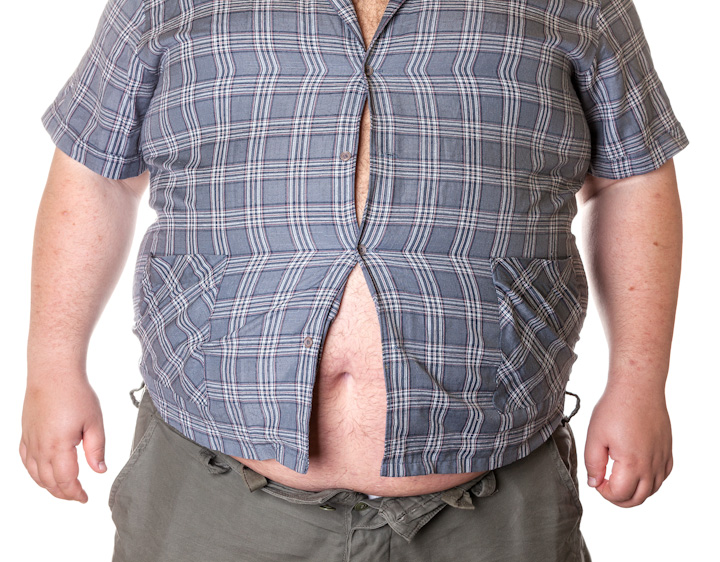
With NHS statistics suggesting obesity levels are increasing a recent case has looked at whether obesity can amount to a disability and come within discrimination provisions.
We review the case again in more detail and what it could mean for UK employers.
The current position
 |
Get our essential weekday HR news and updates.
|

The UK courts have so far failed to recognise obesity as a disability for the purposes of the Equality Act 2010. However with a quarter of the UK population classified as obese this is a growing issue in the UK and the court’s approach lags behind US law which has already recognised obesity as a disability. For this reason the Advocate General’s opinion in the European case of Kaltoft v The Municipality of Billund could pave the way for widespread change in the UK.
Brief details of the case
Karstan Kaltoft was a Danish childminder for his local city council and had been the same weight throughout his 15 years of employment with the council. Mr Kaltoft weighs over 160kg (25st) and he is 1.72 metres tall. This means that Mr Kaltoft has a body mass index (BMI) of 54 and is classed as severe, extreme or morbidly obese (obese class III).
He argued that his employment with the council was terminated due to his obesity and his weight was one of the reasons that he lost his job. For example he alleged that his employment was terminated after he was unable to bend down to tie up shoelaces. As the council disputed the allegations, the Court of Justice of the European Union (CJEU) was asked to rule on whether EU law prohibited discrimination on the grounds of obesity itself and/or whether obesity could be considered a disability.
Opinion
Ahead of the CJEU ruling, the case has been considered by the Advocate General who advised in his opinion that:
- there is nothing in EU law which provides for obesity to be a protected characteristic in its own right
- severe obesity, where BMI is over 40, can come within the definition of a disability which is a protected characteristic
Interestingly the Advocate General considered that the cause of the obesity, that is whether the individual is responsible for their obesity, is not relevant to whether or not it comes within the definition of a disability. If it did, someone who sustained an injury or illness on a self-inflicted basis by taking risks consciously or negligently in traffic or sport for example could be excluded from protection against disability discrimination. Rather, the key question is whether the ‘obesity has reached such a degree that it plainly hinders participation in professional life’ on an equal basis to other workers. If so, it follows that obesity can be a disability.
This opinion reflects the broad perspective adopted in the courts where a person need not be disabled to seek protection from disability discrimination (Coleman v Atridge) and the approach of the UN Convention where disability is considered a social and not purely medical model taking into account prejudicial attitudes and environments that may limit equal treatment.
So what does this mean for UK employers?
The CJEU is still to rule on the case but more often than not it follows the Advocate General’s advice. If the CJEU does agree then it appears only ‘severe, extreme or morbid’ obesity is likely to be deemed a disability (ie anyone with a BMI over 40).
Such a decision could place a burden on employers to legally make provisions for those employees who are severely obese due to an employer’s duty to make reasonable adjustments to accommodate any special requirements arising from that person’s disability.
Examples of reasonable adjustments could include:
- providing car parking spaces close to the workplace entrance
- providing special desks or chairs
- providing duties which involve reduced walking or travelling
- ensuring that healthy meal options are provided in the staff canteen
As with most forms of discrimination obesity is a sensitive subject which will require employers to tread carefully and not make assumptions about the needs of an obese worker. If this case does bring about a change to the scope of domestic disability discrimination employees will need to consider adjusting their approach to obese workers for example by ensuring that workplace banter does not target a particular person because of their weight and all workers are appropriately trained on anti-harassment and discrimination policies.


