


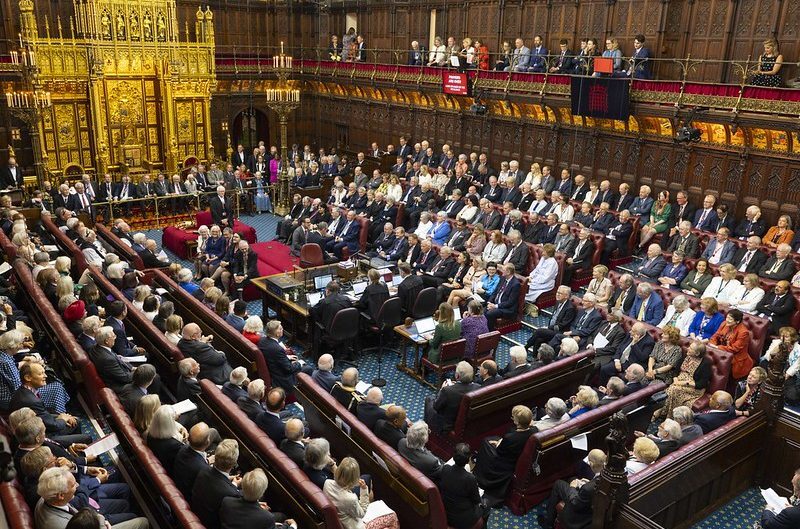

Labour’s flagship Employment Rights Bill is set to become law before Christmas after peers in the House of Lords withdrew their final opposition on Tuesday. The breakthrough clears the way for the most significant expansion of workplace rights in decades, giving millions of workers access to new protections and benefits, including sick pay and paternity leave from day one.
After months of parliamentary wrangling, Conservative peer Lord Sharpe withdrew his last-minute amendment during a brief debate, removing the final roadblock in the so-called ping pong between the Commons and the Lords. Prime Minister Sir Keir Starmer described the outcome as a major victory for working people, marking what he called “the biggest upgrade to workers’ rights in a generation”.
Most measures in the bill will require further detail through secondary legislation before taking effect. The reforms apply to England, Scotland and Wales, but not Northern Ireland, and are expected to receive royal assent this week.
New protections for workers and new pressures for employers
The Employment Rights Bill will cut the qualifying period for unfair dismissal protection to six months, down from the current two years, and introduce day-one rights to sick pay and paternity leave. The legislation includes stronger protections for pregnant women and new mothers, along with measures to support flexible working and guarantee minimum hours for zero-hours staff. Although Labour dropped its original plan for unfair dismissal rights from the first day of employment, ministers said the final bill would still deliver the most sweeping overhaul of employment law in a generation.
 |
Get our essential weekday HR news and updates.
|

Union leaders have welcomed the changes but warned that rapid implementation is needed. Sharon Graham, general secretary of Unite, urged ministers not to delay. “Labour need now to stop being embarrassed by these new laws for workers. The bill had already been watered far too much, not least the failure to ban fire and rehire and zero hours contracts.” She argued that the bill must now be enacted “without any further dilution or delay”.
Paul Nowak, general secretary of the Trades Union Congress, called it a “historic day and early Christmas present for working people across the country”. He said the new law would bring more security, better pay and dignity at work, and echoed Unite’s call for the reforms to be implemented “at speed”.
Business leaders and Conservative figures remain critical of aspects of the bill. The party highlighted that the bill passed on the same day as new figures showed UK unemployment had climbed to 5.1 percent. Shadow business secretary Andrew Griffith described the new law as piling costs onto small businesses and warned that it could freeze hiring and leave jobseekers “paying the price for Labour’s capitulation to their union paymasters”.
HRreview analysis: a fundamental recalibration of rights and responsibilities
Peter Cheese, chief executive of HR organisation the Chartered Institute of Personnel and Development (CIPD) and a representative in the government’s tripartite discussions on the Employment Rights Bill, said the legislation marked a major turning point after a difficult parliamentary journey.
“The passing of this bill, after a difficult passage through parliament, marks a significant shift in employment rights and the rights of trade unions and it has been a key pillar of the government’s agenda,” he said. Cheese added that progress had only been possible through consultation and compromise, and warned that the same approach would be required as further detail is set out through secondary legislation. “This approach will continue to be needed on the many details still to be worked through that will now be part of secondary legislation,” he said.
Cheese said the bill now gave employers clarity and time to prepare for wide-ranging changes to people management practices, some of which needed to begin immediately. He pointed to the backdating of the six-month qualifying period for unfair dismissal, which will apply from January 2027 to anyone who has already completed six months’ service by that point. “This emphasises the importance of clear accountabilities, performance management and feedback practices, and policies,” he said.
He highlighted unresolved concerns around several parts of the legislation, including the lifting of compensation caps for unfair dismissal, the need for reform of the tribunal system, enforcement practices, reference periods for zero-hours contracts, changes to trade union recognition and reforms to collective consultation rules. Cheese said these issues must be addressed through further consultation and welcomed the government’s commitment to that process.
With significant change ahead, Cheese said clear communication and practical guidance from government would be essential, particularly for smaller employers without in-house HR expertise. He said the CIPD would play an active role in future consultations and in supporting HR professionals through guidance and training, including on working effectively with trade unions and managing the new legal framework in a way that supports fair work without holding back recruitment or growth.
Meanwhile, Simon Fowler, CEO of advisory firm Empowering People Group, told HRreview that the new law would bring a seismic change in the balance of workplace rights. He described the changes as “the biggest fundamental shift in employee rights in a generation. It’s a complete recalibration of the worker-employer relationship.”
Fowler urged organisations not to underestimate the scale of the impact, and warned that management complacency could be the biggest risk of all. “HR operating models will need to evolve to deal with the scale of this impact and manager empowerment is a critical factor – line managers must be trained and supported to handle new day-one rights, unfair dismissal requirements, and complex employee relations issues consistently, or organisations can face significant cultural and legal risk. Complacency is the highest risk of all.”
He added that every employee will gain 18 months of crucial security under the new bill, as the countdown to unfair dismissal protection is cut by a year and a half.
Florence Brocklesby, founder of London-based law firm Bellevue Law and a leading workplace law specialist, told HRreview that the bill would bring welcome certainty for employers and allow them to move from speculation to planning.
“Employers should now focus on the important task of adapting policies and practices to comply with the new legislation,” she said. “There are a number of significant changes, and employers should treat implementation as a major project, requiring adequate senior management and HR resource to ensure a smooth roll-out.”
She stressed that managers must be trained to give feedback and manage performance from the outset. “With unfair dismissal rights due to become available after six months of employment, it’s imperative that employers put in place robust hiring processes and strong performance management during the initial months of employment.
Line managers need to be able to give constructive feedback from the outset, so that they can support new employees to succeed in their roles, but also feel able to address issues when they arise. We are advising clients to consider training managers on holding these sometimes challenging conversations.”
Brocklesby also pointed to the impact on organisations with high earners, warning that the removal of the compensation cap for unfair dismissal will require a careful review of exit strategies, especially in financial and professional services.
The next phase: preparing for compliance and culture change
While the detail of secondary legislation is still to be finalised, employers are being urged to move quickly to review contracts, HR policies and management training. Business groups including the British Chambers of Commerce and Federation of Small Businesses said they still had concerns about the potential impact on hiring, but called for the final bill to be passed to give employers certainty before the year ends.
The coming months will see HR leaders working to balance the demands of rapid legal change with the need to maintain workplace morale and manage costs. The passing of the Employment Rights Bill marks a new era for UK employment law, with employers and employees alike facing a period of significant adaptation and adjustment.


William Furney is a Managing Editor at Black and White Trading Ltd based in Kingston upon Hull, UK. He is a prolific author and contributor at Workplace Wellbeing Professional, with over 127 published posts covering HR, employee engagement, and workplace wellbeing topics. His writing focuses on contemporary employment issues including pension schemes, employee health, financial struggles affecting workers, and broader workplace trends.
- William Furney

- William Furney

- William Furney

- William Furney



