


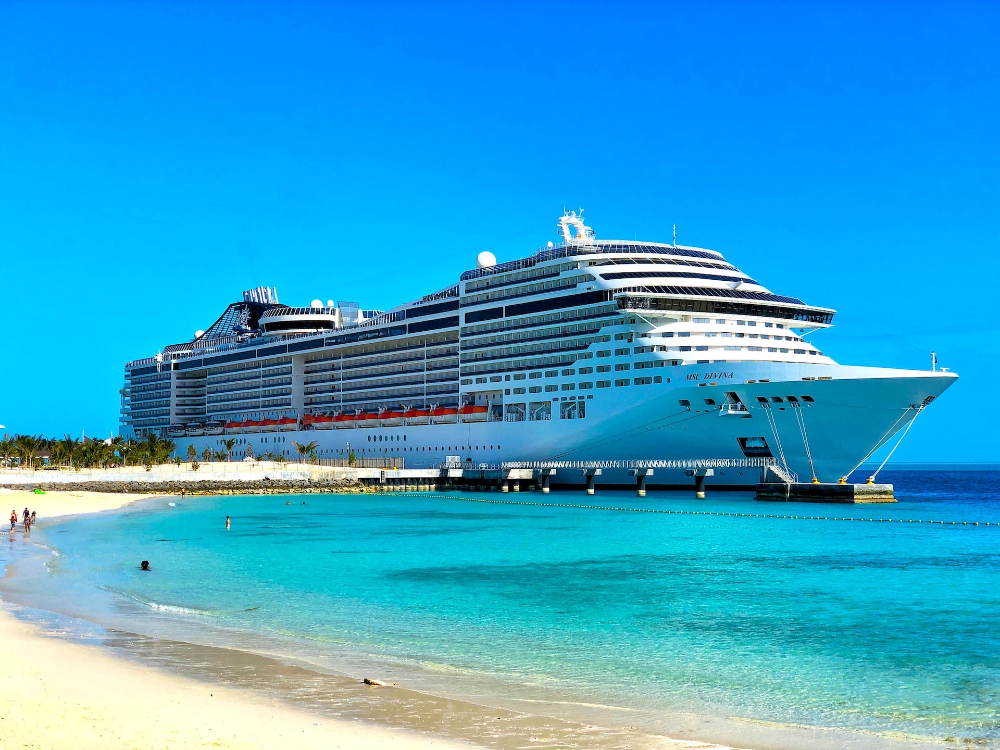

A major cruise ship company, Carnival UK, is facing accusations of planning to terminate the employment of more than 900 staff members if they refuse to accept new terms and conditions for their roles.
Carnival UK, the owner of renowned brands P&O Cruises and Cunard, revealed its “fire and rehire” strategy just one day after initiating discussions with union representatives.
The Nautilus union, representing maritime professionals, asserted that this move by the cruise company demonstrated a lack of genuine commitment to engage in meaningful negotiations.
Contrary to the allegations, Carnival UK insisted that it is “categorically not making any redundancies.”
 |
Get our essential weekday HR news and updates.
|

This development follows a previous dispute involving P&O Ferries, a separate entity, which saw the dismissal of 800 workers last year by its owner, DP World.
What does the controversial decision involve?
The controversial decision involved replacing staff without notice with foreign agency workers earning less than the UK minimum wage.
Nautilus, representing potentially affected crew members, disclosed that Carnival UK has officially notified authorities in the UK and Bermuda about its intention to alter employment terms and conditions for 919 crew members across 10 vessels. The proposed changes would impact crew members on P&O Cruises as well as those serving on ships such as the Queen Elizabeth and the Queen Mary 2.
In a statement, Nautilus referred to Form HR1, a document outlining a company’s redundancy plans submitted to the UK government. “Dismissal and re-engagement may be considered if agreement cannot be reached on new terms,” Carnival wrote in its communication to Nautilus.
Nautilus argued that this suggested the employer never had any intention of engaging in “meaningful negotiation.”
Carnival UK, however, maintained, “We are categorically not making any redundancies and we will not dismiss and re-engage staff.”
The union claimed that the cruise company is effectively seeking to enforce a 20 percent reduction in working days, translating to a decrease from 243 days worked per year to 200 days, resulting in a decline in income for the affected crew members.
A non-negotiable
The changes, Nautilus asserted, are being imposed and deemed “non-negotiable,” leaving members distressed, especially as it appears that the company is removing flexibility regarding when work can be conducted.
Nautilus has written to the company, urging it to withdraw the “fire and rehire” threat and engage in meaningful negotiations.
Shadow Transport Secretary Louise Haigh commented that history is “repeating itself.” She criticised the employers for upending the lives of hundreds of seafarers and emphasised the need for changes in employment law.
Garry Elliot, Nautilus’s senior national organiser, called on the government to learn from the P&O Ferries scandal and “outlaw the coercive practice of fire and rehire.” He stressed that employers should not be allowed to treat their employees with contempt and force fundamental changes without considering the employees’ livelihoods.


Amelia Brand is the Editor for HRreview, and host of the HR in Review podcast series. With a Master’s degree in Legal and Political Theory, her particular interests within HR include employment law, DE&I, and wellbeing within the workplace. Prior to working with HRreview, Amelia was Sub-Editor of a magazine, and Editor of the Environmental Justice Project at University College London, writing and overseeing articles into UCL’s weekly newsletter. Her previous academic work has focused on philosophy, politics and law, with a special focus on how artificial intelligence will feature in the future.
- Amelia Brand

- Amelia Brand

- Amelia Brand

- Amelia Brand



