


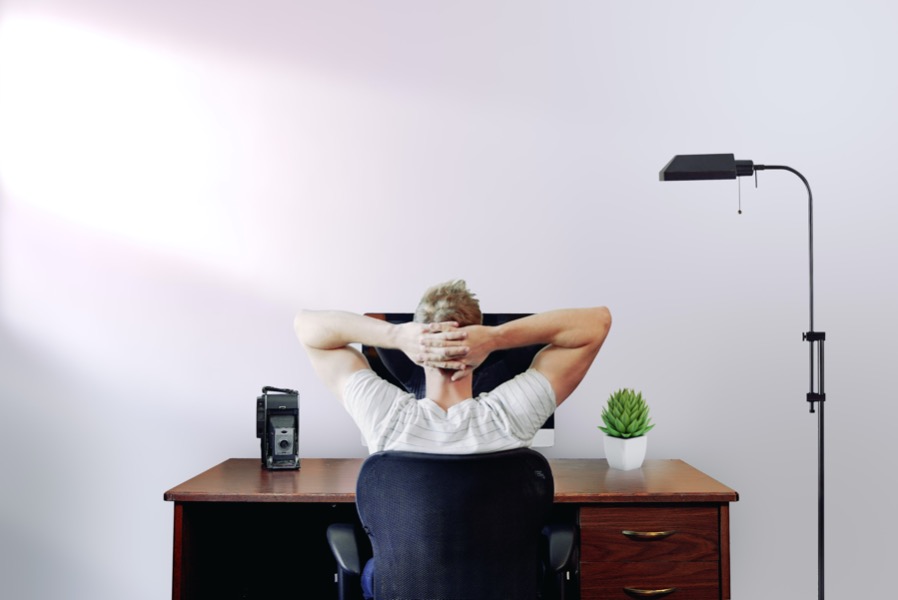

A third of workers want to go back into the offices to boost their mental health, says recruiter Randstad UK.
When workers were asked what they missed about office life when they were working from home throughout the pandemic, 25 percent said “drinks with mates and flirting with my colleagues.”
Working from home “can be cramped and confining and mean less contact with the outside world and fewer social interactions,” says Chief Executive of Randstad, Victoria Short. “Working from home can, in some cases, starve people of social nourishment,” she adds.
 |
Get our essential weekday HR news and updates.
|

An increase of foreign investment into office space
The increase of foreign investment into office space confirms that a transformation of working style is well undergo.
Banking giant Citigroup has outlined a major investment plan in its office space, launching a £100m three-year overhaul of its 42-storey tower in Canary Wharf to revamp the building into an environmentally sustainable eco-office.
Also, Great Portland Estates, the West End commercial property developer, reported a record number of office lettings for its financial year. This included 17 deals in the previous 4 months.
Office space set to socially transform
The pandemic has highlighted the importance of socialising within the workplace.
This has been recognised by companies across the board. Google is paying $1 billion to buy its office complex in Covent Garden in London, reconfiguring it into something more like a club, with covered outdoor working space, and meeting rooms for teamwork.
Short comments that the “traditional office cubical is dead and buried,” calling for employers to recognise the need to create ‘hyper-social’ spaces where employees are encouraged to talk and where it is not all about screen time.
The popularity of hybrid working is increasing
Whilst there is an increase in workers wanting to get back into the office, there is also an increase in the popularity of hybrid working. Workers want “the best of both worlds,” according to those polled by Ranstad UK.
Almost 59 percent said hybrid working offers the best of both worlds, while only 4 percent said it offered the worst of both worlds.
However, Short adds that we “may find that hybrid working no longer becomes about spending ‘some of the week in the office’ – it might be about spending some of the day in the office.’
With the majority of workers keen to return to the office to boost their mental health, it is important to consider the best working environments and the best model of hybrid working.


Amelia Brand is the Editor for HRreview, and host of the HR in Review podcast series. With a Master’s degree in Legal and Political Theory, her particular interests within HR include employment law, DE&I, and wellbeing within the workplace. Prior to working with HRreview, Amelia was Sub-Editor of a magazine, and Editor of the Environmental Justice Project at University College London, writing and overseeing articles into UCL’s weekly newsletter. Her previous academic work has focused on philosophy, politics and law, with a special focus on how artificial intelligence will feature in the future.
- Amelia Brand

- Amelia Brand

- Amelia Brand

- Amelia Brand



