


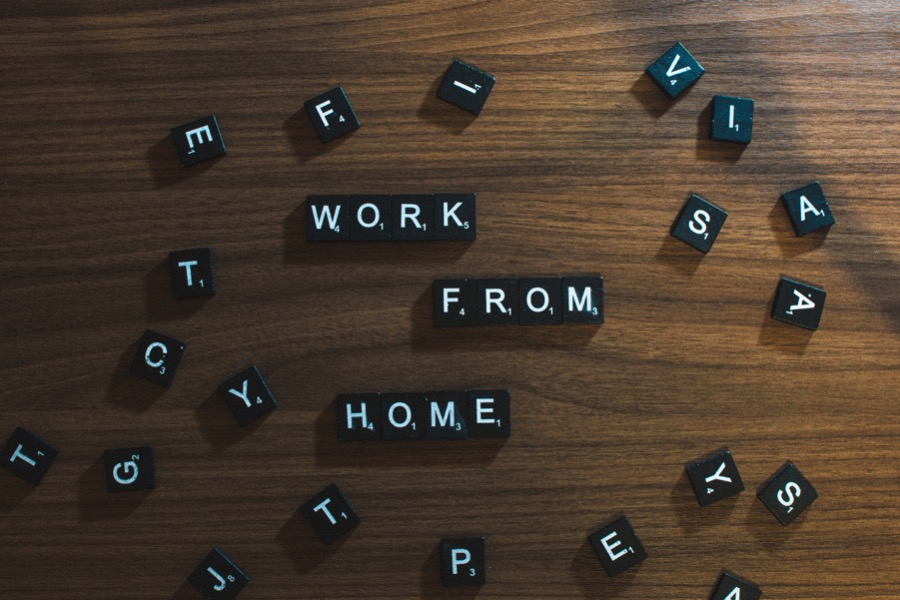

Over half of female workers report that hybrid working has benefitted their career progression.
This is according to research commissioned by IWG.
Three-quarters of the women asked added that hybrid working has made them more productive. Also, 76 percent said it had improved their work-life balance.
A staggering 49 percent said that they would consider leaving their job if they had to work from the office five days a week.
 |
Get our essential weekday HR news and updates.
|

Further, 56 percent agreed that there had been a greater distribution in household and childcare duties between them and their partner since they’ve been hybrid working.
Perhaps subsequently, 38 percent of woman stated that hybrid working improved their mental health.
Additionally, a YouGov survey commissioned by Flexa found that flexibility over working hours and location matter to just 43 percent of men aged 55+.
This compares to a huge 72 percent majority of women under 55. Clearly, women have a lot to gain by working from home.
As we near the end of Women’s History Month, it is important to acknowledge ways in which different models of working have an impact on female mental health and career progression.
How does the type of office impact productivity?
Demand for IWG rural and suburban office space grew by 29 percent in 2021. Three quarters (75%) would like to have an office space 15 minutes of their home.
Companies are realising the benefits of the ‘hub and spoke’ model for office space, according to the research by IWG.
This model results in workers splitting their time between home, a local office, and a company HQ.
Clearly, demand for suburban and rural location continues to accelerate as an increasing number of workers refuse to make long and expensive daily commutes.
Hybrid working promotes a better work/life balance whilst also aiding productivity
“Without hybrid working its likely I would have had to scale back my hours, and potentially the seniority of my role. Prior to the pandemic I commuted into our central London office four days a week, now it’s usually just one. I have two young children and hybrid working means I don’t have to make choices between work and family,” says Head of the Contracts Advisory Team for the Society of Authors, Sarah Burton.
“We’re fortunate to have a progressive CEO who champions flexible working. We’ve also found that we are better using our time spent in the office, with meetings and other collaborative tasks becoming more effective. Under hybrid working I am working more efficiently while also having more time, so it’s a win-win,” adds Sarah.
What does this mean for future models of working?
“The pandemic has proved people can be just as productive when they’re splitting their time between home and the office and it’s highlighted the huge opportunity we have to improve working life,” says Group Chief Commercial Officer at IWG, Fatima Koning.
“For women, the hybrid model represents a crucial opportunity to address existing inequalities at work and at home and has unprecedented potential to support women’s wellbeing, family lives and career aspirations. While, for employers there is a vast opportunity to attract more female talent and add tremendous value to their businesses,” adds Koning.
Not only does a hybrid model of working aid productivity, but the reported levels of increased sharing of household duties allows for greater female progression.


Amelia Brand is the Editor for HRreview, and host of the HR in Review podcast series. With a Master’s degree in Legal and Political Theory, her particular interests within HR include employment law, DE&I, and wellbeing within the workplace. Prior to working with HRreview, Amelia was Sub-Editor of a magazine, and Editor of the Environmental Justice Project at University College London, writing and overseeing articles into UCL’s weekly newsletter. Her previous academic work has focused on philosophy, politics and law, with a special focus on how artificial intelligence will feature in the future.
- Amelia Brand

- Amelia Brand

- Amelia Brand

- Amelia Brand



