<

!Google ads have two elements of code. This is the 'header' code. There will be another short tag of code that is placed whereever you want the ads to appear. These tags are generated in the Google DFP ad manager. Go to Ad Units = Tags. If you update the code, you need to replace both elements.> <! Prime Home Page Banner (usually shows to right of logo) It's managed in the Extra Theme Options section*> <! 728x90_1_home_hrreview - This can be turned off if needed - it shows at the top of the content, but under the header menu. It's managed in the Extra Theme Options section * > <! 728x90_2_home_hrreview - shows in the main homepage content section. Might be 1st or 2nd ad depending if the one above is turned off. Managed from the home page layout* > <! 728x90_3_home_hrreview - shows in the main homepage content section. Might be 2nd or 3rd ad depending if the one above is turned off. Managed from the home page layout* > <! Footer - 970x250_large_footerboard_hrreview. It's managed in the Extra Theme Options section* > <! MPU1 - It's managed in the Widgets-sidebar section* > <! MPU2 - It's managed in the Widgets-sidebar section* > <! MPU - It's managed in the Widgets-sidebar section3* > <! MPU4 - It's managed in the Widgets-sidebar section* > <! Sidebar_large_1 - It's managed in the Widgets-sidebar section* > <! Sidebar_large_2 - It's managed in the Widgets-sidebar section* > <! Sidebar_large_3 - It's managed in the Widgets-sidebar section* > <! Sidebar_large_4 - It's managed in the Widgets-sidebar section* > <! Sidebar_large_5 are not currently being used - It's managed in the Widgets-sidebar section* > <! Bombora simple version of script - not inlcuding Google Analytics code* >

Disability pay gap closing – but too slowly

-

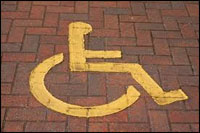
Today (03/12/19) is International Day of Disabled Persons, with research showing that the disability pay gap is narrowing but at a slow rate.

The Office for National Statistics (ONS) has found that disabled employees are paid 12.2 per cent less than non-disabled employees, which is down from 12.7 per cent in 2017.

The gap between disabled and non-disabled people in jobs has decreased to a higher extent, however, it is over a longer period. In 2013, 43 per cent of disabled people had jobs, compared to 77 per cent of non-disabled people representing a gap of 34 per cent. This had reduced to a gap of 28 per cent in 2019. With 53 per cent of disabled people in employment in contrast to 82 per cent of non-disabled people.

Tom Hadley, director of policy at the Recruitment and Employment Confederation (REC), said:

The employment gap falling over the last six years is good news. It shows that employers are moving from good intentions to making a tangible difference on the disability and wider inclusion agenda.

There is still a lot more work needed, and ample opportunity, to close the gap further. Initiatives like the Recruitment Industry Disability Initiative (RIDI) and the REC’s Good Recruitment Campaign, supported by nearly 500 businesses, are leading the way in breaking down the barriers that people with disabilities face entering and thriving in the world of work.

Showing businesses practical examples of what works to encourage inclusive recruitment is the right way forward. Recruitment professionals have a pivotal role to play here. 90 per cent of businesses say that what they are looking for from an external recruitment provider is access to expertise.

Dr Jill Miller, diversity and inclusion adviser at the CIPD, said:

It’s encouraging to see progress has been made on narrowing the disability employment gap, but there is still a way to go to achieve equality of opportunity. Too many disabled people continue to face prejudice and struggle to get into employment or to remain in work, and are less likely to progress to senior management roles or to work in professional occupations.

Businesses that aren’t inclusive – and don’t manage health and disability effectively – risk missing out on hard working and talented individuals, and damaging their reputation among staff and customers. They could also face legal action if they fail to comply with equalities law.

Employers can help to close the disability employment and progression gap by ensuring that line managers are aware of their responsibilities around making reasonable adjustments. These are often perfectly achievable, such as providing flexibility over working patterns.

The ONS data placed disability in to different categories including mental impairments.

Darius is the editor of HRreview. He has previously worked as a finance reporter for the Daily Express. He studied his journalism masters at Press Association Training and graduated from the University of York with a degree in History.

Latest news

Turning Workforce Data into Real Insight: A practical session for HR leaders

HR teams are being asked to deliver greater impact with fewer resources. This practical session is designed to help you move beyond instinct and start using workforce data to make faster, smarter decisions that drive real business results.

Bethany Cann of Specsavers

A working day balancing early talent strategy, university partnerships and family life at the international opticians retailer.

Workplace silence leaving staff afraid to raise mistakes

Almost half of UK workers feel unable to raise concerns or mistakes at work, with new research warning that workplace silence is damaging productivity.

Managers’ biggest fears? ‘Confrontation and redundancies’

Survey of UK managers reveals fear of confrontation and redundancies, with many lacking training to handle difficult workplace situations.
- Advertisement -

Mike Bond: Redefining talent – and prioritising the creative mindset

Not too long ago, the most prized CVs boasted MBAs, consulting pedigrees and an impressive record of traditional experience. Now, things are different.

UK loses ground in global remote work rankings

Connectivity gaps across the UK risk weakening the country’s appeal to remote workers and internationally mobile talent.

Must read

Chris Harper: In AI we trust – rebuilding verification for a digital age

The systems we use to verify identities, credentials and histories are undergoing a fundamental change in the age of AI.

Dogs at work – are we missing a trick?

Charlotte Cooke-Vaughan, an HR consultant at law firm Cripps, celebrates the many documented benefits (wo)man’s best friend brings to the workplace.
- Advertisement -

You might also likeRELATED
Recommended to you

Exit mobile version



