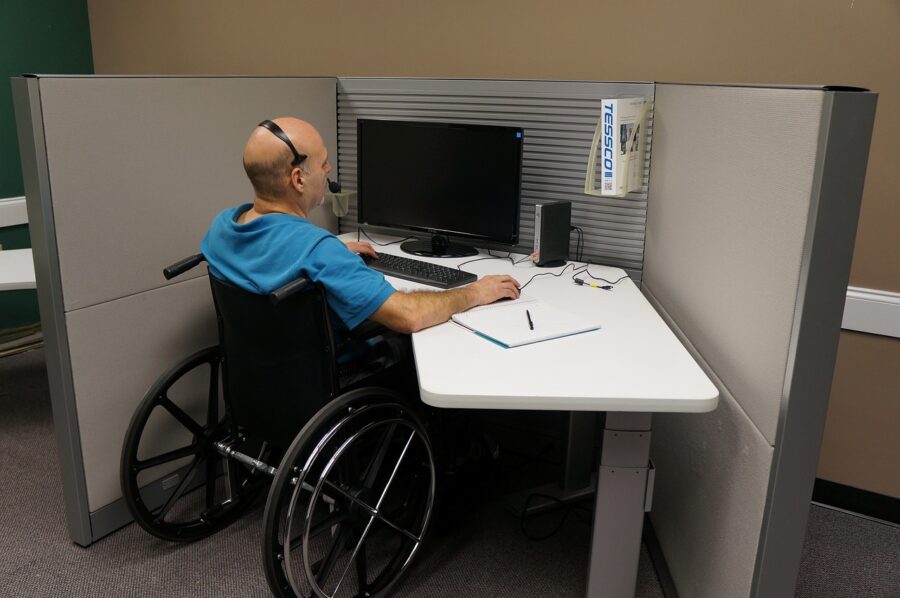

New data from the Office for National Statistics (ONS) highlights the ongoing pay disparity between disabled and non-disabled employees in the UK.
In 2023, disabled employees earned 12.7 percent less than their non-disabled counterparts, a pay gap that has remained largely stable since 2014. According to the ONS, median hourly pay for disabled employees was £13.69, compared to £15.69 for non-disabled employees.
The ONS report reveals that the disability pay gap affects men more significantly than women. In 2023, disabled men earned 15.5 percent less than non-disabled men, with median hourly earnings of £14.44 compared to £17.08. For women, the gap was narrower, at 9.6 percent. Disabled women earned a median of £13.11 per hour, compared to £14.50 for non-disabled women.
While the gender pay gap analysis generally shows women earning less than men, the disability pay gap highlights that disabled men earn a median hourly wage comparable to that of non-disabled women.
 |
Get our essential weekday HR news and updates.
|

Full-Time vs. Part-Time Employment Pay Gaps
Another notable finding is the difference in the pay gap between full-time and part-time employees. Full-time disabled employees experienced an 11.2 percent pay gap, earning £15.00 per hour, compared to £16.89 for non-disabled full-time workers. In part-time roles, the gap was smaller at 4.1 percent, with disabled part-time employees earning £11.25 per hour, compared to £11.73 for their non-disabled counterparts.
The size of the disability pay gap also varies significantly across different occupations. Employees in higher-paid roles, such as managers, directors, and senior officials, faced one of the widest gaps, at 11.1 percent. Conversely, lower-paid roles, such as elementary occupations, sales and customer service roles, and caring and leisure services, had some of the narrowest gaps, ranging from 0.0 to 1.3 percent.
Minimum wage legislation may be a factor in narrowing the gap for lower-paid positions. However, those in senior roles, where pay is typically higher, continue to face notable disparities.
Disability Type and Pay Inequality
Employees with specific disabilities face some of the widest pay gaps. Disabled employees with autism had the largest gap, earning 27.9 percent less than non-disabled employees. Those with epilepsy experienced a gap of 26.9 percent, and employees with severe or specific learning difficulties or difficulty seeing faced a gap of 20.3 percent.
These figures suggest that certain disabilities, particularly neurological or sensory impairments, have a more profound impact on earning potential, even after adjusting for personal and work-related factors such as occupation, qualifications, and geography.
While the disability pay gap persists across most impairment types, the data shows some improvement for certain groups. After accounting for personal characteristics such as age, occupation, and qualifications, the pay gap narrowed the most for employees with autism, severe learning difficulties, and visual impairments. However, the gap remains substantial, indicating that more needs to be done to address these inequalities.
Dan White, policy and campaigns officer at Disability Rights UK, commented the findings saying, “When Labour came to power in July, they committed to full and equal pay for Disabled people. Whilst this report focuses on the pay gap in 2023, it shows that unfair pay conditions for Disabled employees persist.
“For years successive Governments have been on a drive to push more Disabled people into work without any consideration of the challenges Disabled people face in the labour market. This report shows that discrimination at work is a major issue and mustn’t be ignored.
“The responsibility to make change doesn’t only lie with government, employers must take active measures to tackle the unfairness of the disability pay gap.”


Alessandra Pacelli is a journalist and author covering human resources and employment topics. She contributes regularly to HRreview, where she reports on labour market trends, employment costs, flexible working policies, HR wellbeing, and AI adoption in HR. Her work focuses on analysing industry research and policy insights relevant to HR professionals and organisational leaders.
- Alessandra Pacelli

- Alessandra Pacelli

- Alessandra Pacelli

- Alessandra Pacelli