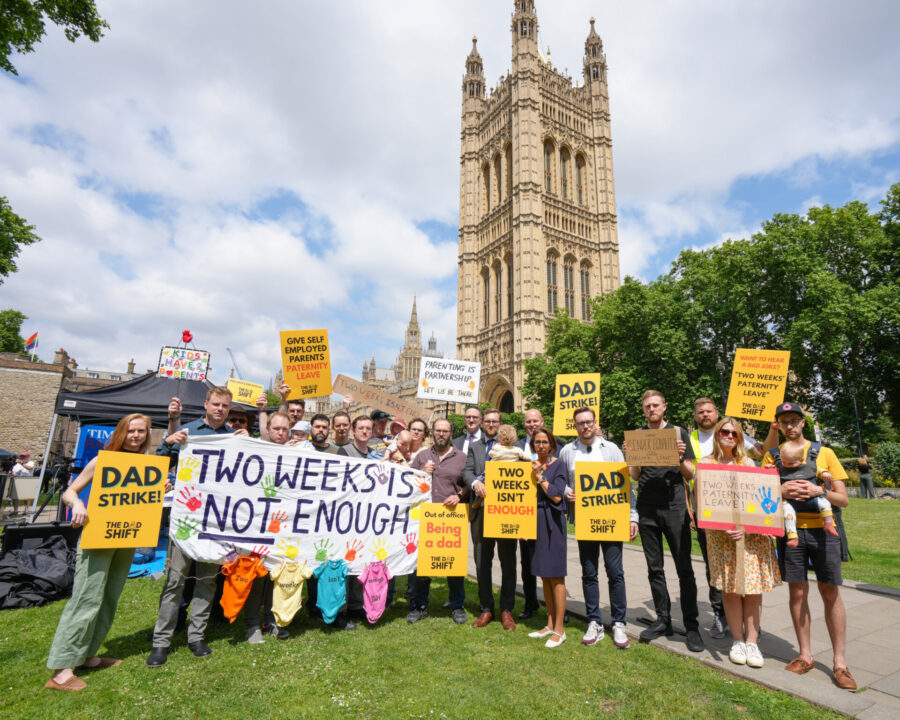

A grassroots campaign demanding sweeping reform of the UK’s “broken” paternity leave system has forced the government to review current legislation, opening the door to what organisers say could be a once-in-a-generation opportunity for change, HRreview can exclusively reveal.
The DadStrike, led by campaign group Dad Shift, was held on June 11 and quickly gained widespread media attention, generating coverage as far afield as South Korea. The protest prompted a meeting with ministers and an unexpected concession from the government that the system needs to be improved.
“This review gives us a once-in-a-generation chance to win better paternity leave, and we’re going to be doing everything we can to encourage the government to take it,” DadShift co-founder Alex Lloyd Hunter told HRreview.
Statutory paternity leave in the UK is currently just two weeks, paid at £187.18 a week — well below the minimum wage — with no entitlement at all for the self-employed.
 |
Get our essential weekday HR news and updates.
|

Campaigners argue that this leaves many fathers unable to afford to take leave, deprives children of early bonding and reinforces gender roles that fuel the pay gap between men and women.

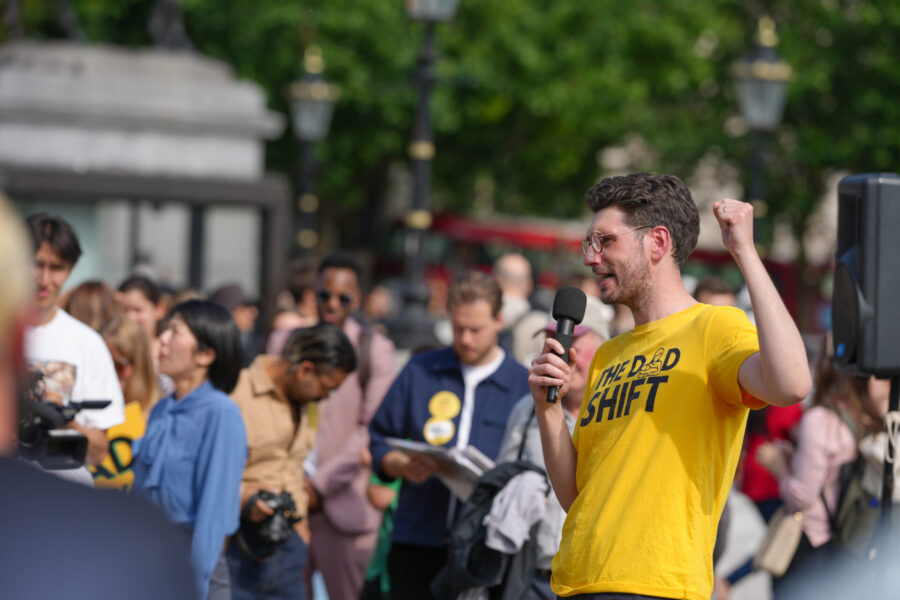
“The UK’s paternity leave is broken, and it’s hurting everyone – mums, dads, kids and our society,” Lloyd Hunter said. He said it was “not just bad for fathers who want to bond with their babies and support their partners; it’s actively driving the gender pay gap by forcing couples into traditional breadwinner-homemaker roles whether they want them or not.”
He added that “[t]aking two weeks of statutory paternity leave costs the average dad over £1,000 in lost earnings. So a third of fathers don’t take any leave at all, going back to work within days of their child being born, and over half of those who do fall into financial hardship.”
According to Dad Shift, nearly half of new fathers experience multiple symptoms of depression or anxiety during their baby’s first year, driven by financial pressure and lack of time to build early relationships with their children.
The campaign is calling for at least six weeks of paternity leave at 90 percent of salary, including coverage for the self-employed. The Joseph Rowntree Foundation, a social change charity, has estimated such a move would generate £2.68 billion in economic growth while costing £220 million net.
Government review underway
The government has now confirmed to HRreview that a full review of parental leave entitlements is underway, with a focus on both the length and pay of paternity leave.
“We know the parental leave system needs to be improved and will be carrying out a review to ensure it best supports working families, and through our Employment Rights Bill we will remove the 26-week continuity of service requirement for paternity leave,” a government spokesperson said.
The government said its review would take “a system-wide view” of current entitlements and aims to update a framework that “has evolved over time” without full strategic oversight.
While the Employment Rights Bill would make paternity leave a “day one” right, campaigners argue that much more fundamental reform is needed to make leave financially viable for most fathers, particularly those on low and middle incomes.
Shared parental leave ‘out of reach’
Lloyd Hunter criticised the existing Shared Parental Leave (SPL) system as “fundamentally broken”, pointing to government data showing that fewer than 2 percent of eligible families use it.
SPL is “poorly paid, too complicated, and forces fathers to take leave away from mothers,” he said. “Sixty percent of claims come from the top 20 percent of earners, while just 100 dads in the bottom third managed to access it last year. Evidence from other countries is clear: if you want fathers to take leave, you need to start by giving their own ringfenced allocation that’s properly paid. Only then can you successfully build shared leave on top of that foundation.”
Some larger employers have introduced enhanced paternity policies, but campaigners say it has led to growing inequality between employees in larger firms and those in small businesses.
“We’re seeing more employers stepping up and offering enhanced paternity leave, because they’ve clocked onto the fact that giving their dads enough time away so they come back fully ready to work is actually better for their business,” Lloyd Hunter said. “But it’s typically only big companies that can afford good policies, which is why we need better statutory paternity leave to level the playing field.”
He added that there was “still a stigma in many companies that prevent fathers from taking all the leave they’re allowed. The only way to properly shift that is to normalise it by giving everyone a good amount of statutory leave”.
Gender pay gap link
Campaigners also argue that improving paternity leave is essential to tackling structural inequalities in the workplace, including the gender pay gap. In many households, women remain the default caregivers simply because statutory provisions push men back to work too soon after childbirth.
Lloyd Hunter said the first DadStrike was a success because it “secured us a meeting with the Secretary of State responsible for paternity leave, and a recognition from the government the next day in parliament that the parental leave system needs improving and they would look at both the length and pay of paternity leave in their upcoming parental leave review”.
As the government review gets underway, campaigners are positioning DadStrike as a long-term movement rather than a one-off protest. With ministers now acknowledging the shortcomings of the current system, the coming months may prove decisive for the future of parental leave in Britain.


William Furney is a Managing Editor at Black and White Trading Ltd based in Kingston upon Hull, UK. He is a prolific author and contributor at Workplace Wellbeing Professional, with over 127 published posts covering HR, employee engagement, and workplace wellbeing topics. His writing focuses on contemporary employment issues including pension schemes, employee health, financial struggles affecting workers, and broader workplace trends.
- William Furney

- William Furney

- William Furney

- William Furney