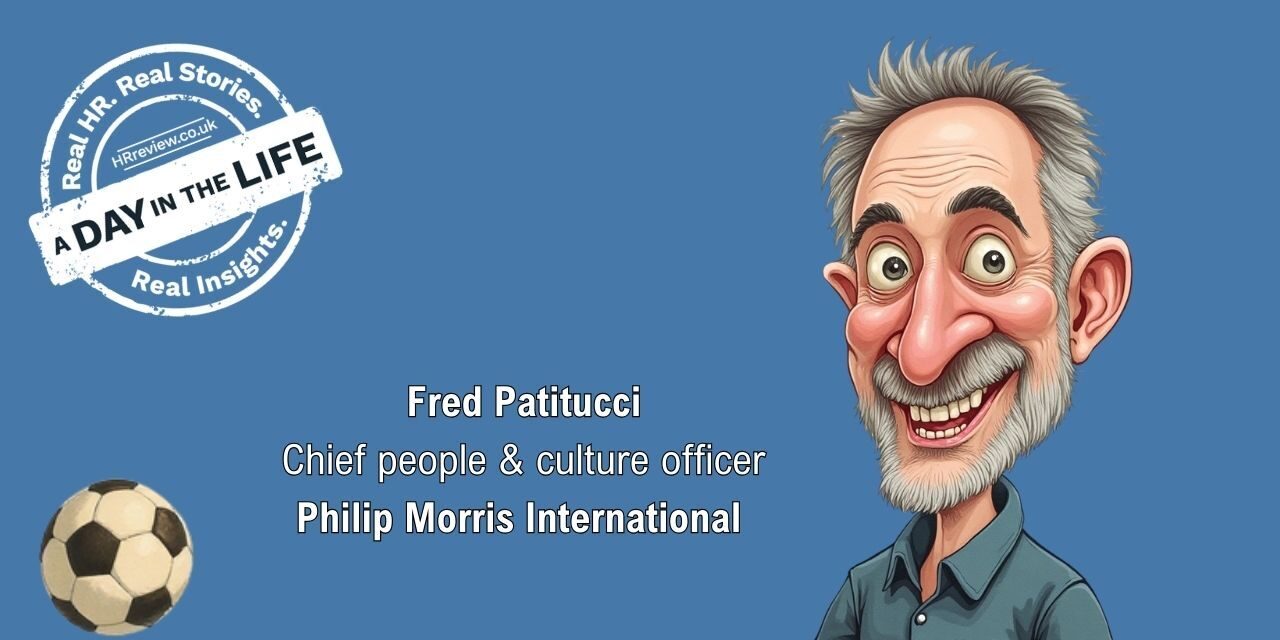

Leading people strategy at a company undergoing one of the most ambitious transformations in corporate history, Fred Patitucci starts each day not in the boardroom, but around the breakfast table with his three children in Switzerland.
As Chief People & Culture Officer at Philip Morris International, Fred is helping to shape the workforce behind the firm’s pivot away from cigarettes and towards a smoke-free future. Born in Morocco, raised in France and part of a multicultural family, he brings a global, human-centred perspective to the challenge of evolving a legacy business into one focused on science, innovation and wellbeing.
Fred shares what drives his leadership, how he stays grounded amid global responsibility, and why he believes the future of work must be both more personal and more purposeful.
I wake up around six in the morning. The first thing I do is say good morning to my wife, check my emails and then we get moving with the morning routine starting with an energising shower.
 |
Get our essential weekday HR news and updates.
|

Our kids are aged nine, eleven and 12, so mornings are full of motion and energy. I wake them up and we make the beds together. It might seem minor, but it’s a grounding moment before the day begins. It’s also a small way of teaching kids’ responsibility and encouraging independence, showing them that little routines matter.
Then I head straight to the kitchen to make breakfast. It’s rarely simple. On most days I am making different meals at once. One wants pancakes, another prefers cereal and the third asks for an omelette or toast with peanut butter and fruits. It is a small daily juggling act, but one I genuinely enjoy.
During breakfast, my wife reads them the characteristics and fun facts about a country from a book called Countries of the World. The kids then try to guess the capitals of all the countries we have previously studied. She also uses a globe to show them where each country is located. So far, we’ve explored 72 countries and are currently learning about Ghana.
Then I drive them to school, which gives us some extra time to connect and talk. Often, we play along with a guessing game on the French radio, and we call my wife so the whole family can join in together.
When I arrive at the office, I head straight to the lounge for a coffee. It’s a great opportunity to see colleagues and often our chief executive officer. These casual morning conversations are some of the most energising parts of my day.


Once I settle in, the pace picks up quickly with back-to-back meetings. I work across many areas of our people strategy, from leadership development and organisational design to building a culture rooted in growth, wellbeing and shared values. Much of my focus is on how we can elevate the employee experience and bring our company’s values — what we call the PMI DNA — to life in a meaningful way.
I usually have lunch in one of the company restaurants. It’s more than a break. It is a chance to recharge and have informal conversations that often spark new ideas. I also use that time to reconnect with the broader purpose behind our work and reflect on how we are aligning as an organisation.
One of the most exciting developments I see in human resources is the rise of personalisation. While technology will play a role, what truly matters is our ability to understand what motivates people and to design work experiences that reflect those individual needs. I believe human resources will become more adaptive, more human and more focused on individual potential.
The advice I give to people early in their human resources careers is to stay self-aware and true to themselves. Be open to feedback, even when it’s uncomfortable. Take time to reflect on where you want to be in five years and start taking steps now to move in that direction. The most impactful people I have worked with are the ones who stay curious and committed to life-long learning.
My afternoons are usually packed with conversations, projects and decision-making sessions. I’m not big on rigid productivity systems. What keeps me motivated is connection with people, with purpose and with the culture we’re building. One thing that frustrates me is when human resources becomes too focused on process. Processes are important, but they should never replace empathy or common sense.
One thing that might surprise people about me is that when I was 14, I was scouted by a professional football coach while playing on the pitch in France. The coach asked my father if I could leave school to join a football academy. My father’s answer was clear: he needs to study first. Years later, my own son is playing football. He’s already better than I ever was. And I found myself giving him the same advice: education first, then football.
At the end of the workday, I always clean out my inbox. It gives me a sense of closure and helps me reset. I also take a moment to reflect: Did I help someone grow? Did I model the kind of leadership we want to see across the company? Did I help move something forward in a way that felt meaningful? These quiet check-ins help me stay grounded and purposeful.
I believe human resources will become more adaptive, more human and more focused on individual potential
Evenings are about family. We eat dinner in an informal setting around the kitchen and we talk about the day. I help with homework and try to be fully present. After I go through the bedtime routine with my kids, I check emails one last time and then I read.
Right now, I’m reading Lessons in Chemistry by Bonnie Garmus. It’s a story about a brilliant and unconventional woman scientist in the 60s navigating a rigid world that often underestimates her. I’m drawn to characters like that — people who challenge expectations, who lead in unexpected ways and who stay true to themselves no matter the circumstances. It’s both inspiring and refreshing, and a reminder that the impact we make often starts by simply being ourselves.
Twice a week I train with my remote health coach, who is from Venezuela and currently studying and living in Spain. I tend to fall asleep easily, but before I do, I ask myself a final question: Did I leave the organisation a little better than I found it today? Did I feel proud of how I showed up?


William Furney is a Managing Editor at Black and White Trading Ltd based in Kingston upon Hull, UK. He is a prolific author and contributor at Workplace Wellbeing Professional, with over 127 published posts covering HR, employee engagement, and workplace wellbeing topics. His writing focuses on contemporary employment issues including pension schemes, employee health, financial struggles affecting workers, and broader workplace trends.
- William Furney

- William Furney

- William Furney

- William Furney