

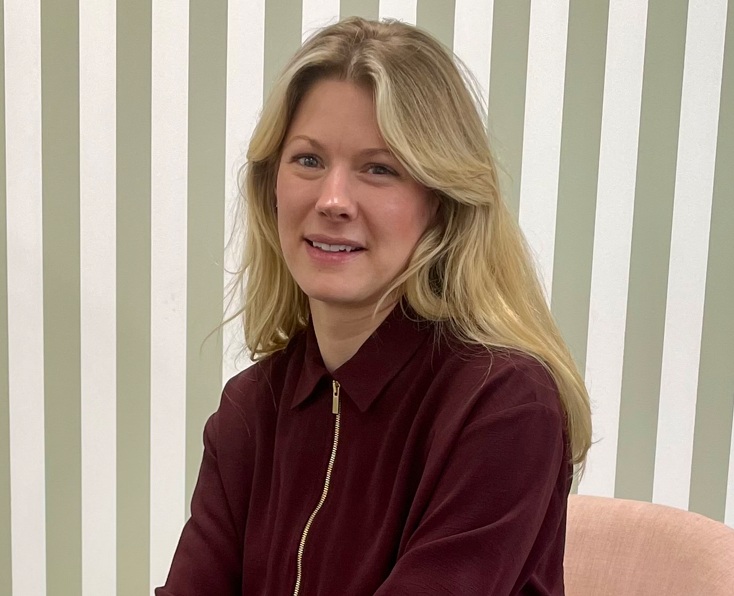
Eva-Maria Stegemann Moubray has built her career around challenging traditional approaches to people management, combining organisational psychology with a strong focus on data, capability and forward-thinking design. As head of people and operations at RCK Partners, a specialist tax advisory firm in the City of London, she oversees the people function alongside operations and client experience, helping shape how the business grows and supports its workforce.
At 38, Stegemann Moubray has spent much of her career with EY, the global professional services firm, working across Germany and the UK before settling permanently in Britain. Alongside her corporate roles, she has remained closely involved in mentoring and volunteering, supporting young people and those returning to work, drawing on her own experience of navigating career progression and motherhood.
Now based in rural Rutland after relocating from London, she balances a senior leadership role with family life alongside her husband and their two young daughters. With a long commute into the City, a structured approach to work and a focus on being present at home, her days are shaped by careful planning, adaptability and a clear sense of priorities.
At 6am, if I’m commuting that day, my morning begins with refreshing the Trainline app to check if my train is on time. Don’t we all?
 |
Get our essential weekday HR news and updates.
|

I’ll make my first coffee of the day and check my phone to review the day ahead, both work and personal. I’m also a big coffee drinker, and I like it strong but I’m trying hard to limit myself to three a day and moving to decaf after number two.
When working from home, I go on to negotiate getting two small humans dressed and fed to eventually drop them at school. That feels like half a working day done most days.
I prefer a structured day, which is probably thanks to my German side. I lay out clothes the night before and tend to write a to-do list for the next day, just before shutting off for the night. In the morning, I’ll either listen to world news on the radio, while drinking my coffee and checking my phone, or read the paper on my phone on the train and check the latest business-related updates to get ahead of the day.
With two young children and a leadership role, I’ve learned that structure is less about control and more about being flexible.

If I’m not working remotely, I commute by train, which is just over two hours one way. It’s a long journey but it tends to be much-needed thinking and admin time. I get the chance to work through my inbox, think more strategically or just sort life admin like booking after-school clubs.
Monday is one of our anchor days and starts with brief conversation in the morning with people in the office to deliberately connect, rather than just disappearing behind my desk that day. I’ve pretty much always worked in a hot-desk environment and the only things you’ll find on it are a phone charger, my work phone and empty coffee cups. And recently a copy of HR Transformation by Dave Ulrich that a colleague kindly gave me.
9:30am is where we bring everyone together for a weekly kick-off to share success and learning for last week, highlights of the new week, updates on financials and celebrate recent anniversaries, etc. Our executive committee gets together afterwards to debrief on the week ahead. After this, it’s straight into meetings, which often run back-to-back.
After work, we often get together for a chat, which I thoroughly enjoy. I like to make sure I step out to get fresh air and grab lunch. It tends to be something that I don’t bother making at home, like sushi.
I’m excited about a shift towards skills-first and capability-led organisation design. It’s essential to prioritise capability over credentials, rather than hiring or promoting based purely on tenure or academic background.
Who’s adaptable, who’s keeping themselves up to date more than ever and who is able to operate in ambiguity are what stands out for me. This mindset shift gives organisations the chance to broaden their talent pools beyond traditional career paths, enabling employees to move laterally, workforce planning to align skills with commercial forecasting and measuring contribution through impact rather than role containment.
I have a few pieces of advice that I have learned across my career. I was fortunate to learn early in my career at EY to develop commercial fluency. It’s important to understand financial KPIs and wider commercial risks.
Working in a people profession is often about speaking up and addressing uncomfortable topics. This is a skill which I have learnt during my career. Invest time in learning negotiation and conflict resolution and mediation skills.
Lastly, less HR specific but a partner at EY shared with me early on that, in nicer words, nothing would ever be presented to me on a silver plate. It taught me to be proactive and to put myself out there for career progression, whether to be seconded or promoted.
My mornings and afternoons are not structured differently. Especially the days in the office are very much focused on in person collaboration. I hold a weekly team meeting with my teams, which fills a few hours on a Monday.
Snacks, not always the healthiest options, keep me going in the afternoon. I’m a big chocolate lover.
I’m a big fan of routine and acutely aware of the risks of habits at the same time. Due to how my husband and I structure our work and family life during the week, there isn’t much room for error in our schedules.
My calendar is a “rainbow”, as my children call it. I work with coloured blockers and reminders to structure my day and allow for time not in meetings. A positive side effect is it lifts my spirits seeing it with my girls’ eyes too.
What I currently compromise on, because I haven’t managed to build into my routine yet, is time to exercise at a dedicated day and time. One of my resolutions this year, though, is to get that organised. That’s because sport has been a huge part of my life, playing volleyball at least three times a week. Tennis and skiing was part of my upbringing too, which I still enjoy, if less frequently to date. When I became a mother, and especially when I went back to work after number two, exercising became less of a priority.
I’m not good at doing multiple things at once as I end up not doing either well enough. When I’m with the girls, I aim to strictly not be working and be present as a mum. Bedtime, if not in London, is a non-negotiable, with no phones allowed. At all.
I’m keen for the people profession to simplify where possible. I celebrate efficient processes and common sense over policies and procedures, although they also have their place. I aim to design systems designed for highly capable adults, of course within legislative boundaries.
What may surprise people is that my focus on efficiency is deeply people-centred. Clarity and operational discipline reduce friction, ambiguity and stress. Efficiency, when done properly, can be very humane in my eyes.
At the end of the day, I review what was achieved versus planned, adjust tomorrow’s priorities accordingly and aim to close open loops so I’m not carrying mental residue into my night. This is, admittedly, easier achieved on some days than others.
I aim for boundaries, but senior roles blur lines. I very much enjoy the flexibility. The days I’m working from home, I pick up my children and set time aside in the afternoon for being together and present. After bedtime, when the house is quiet, I might decide to open my laptop, often with a glass of wine and a bowl of crisps within reach.
I have an automated message set-up which reminds my team that my working hours may not be theirs and only to respond during their normal working hours. As I have kids, it’s not unusual for me to log on after doing the bedtime routine so I can spend the earlier evening focused on them.
When I’m in the office, I often get home late. On those days, my husband manages our family life, and I often come home to dinner cooked. During the week it’s usually something quick, sometimes ready-made, but always mixed with lots of fresh vegetables. On an ideal night, we sit together and reflect on our days and debate about interior design choices to make as we are renovating a Grade II listed farmhouse.
One of the perks of a long commute is that I’ve switched off by the time I come home. Otherwise – and I only learned this over the years – setting clear boundaries makes a tangible difference. It’s a process to figure out what worked for myself as an individual, the business and family. What works for one doesn’t work for another. That’s the beauty of life and choices we make.
I go to bed early. Ten is when I switch off the lights. I tend to fall asleep quickly. I practice with my children to reflect on their day by sharing one low and one highlight. I like the idea of thinking about something positive to close the day.


William Furney is a Managing Editor at Black and White Trading Ltd based in Kingston upon Hull, UK. He is a prolific author and contributor at Workplace Wellbeing Professional, with over 127 published posts covering HR, employee engagement, and workplace wellbeing topics. His writing focuses on contemporary employment issues including pension schemes, employee health, financial struggles affecting workers, and broader workplace trends.
- William Furney

- William Furney

- William Furney

- William Furney