
Dividing her time between Staffordshire, Leicester and locations across the UK, Elizabeth Hardwick-Smith, 47, leads the people strategy at multidisciplinary consultancy Pick Everard. As group people and culture director, she heads a 16-strong team and works closely with the executive board to shape the business’s talent, culture and employee experience across its 13 offices.
Married to Craig, a chief design engineer at Rolls-Royce, and mum to two school-aged children, Elizabeth balances senior leadership with family life, frequent travel and village walks with Winnie, the family’s energetic young border collie. She brings more than two decades of HR experience across sectors and continents, including major roles in engineering, finance and construction.
Having joined Pick Everard in the wake of its acquisition by French group Artelia, Elizabeth is now leading UK convergence efforts while driving national people priorities in areas such as retention, agile working and leadership development. In this edition of A Day in the Life of an HR Professional, she shares how Neuro-Linguistic Programming supports her coaching work, why structured flexibility is key to thriving in a senior HR role, and how she’s helping align business strategy with purpose and wellbeing.
I travel a lot with my role but it’s balanced with some working from home as part of a hybrid working pattern. My routine changes in and around my work and family commitments but generally, I wake between 6.30am and 7.00am.
 |
Get our essential weekday HR news and updates.
|

In my mind I’ll be running through my plan for any key meetings or discussions and any final actions I need to take for those. My job and home life are very busy, so I need to frequently work on a “just in time” principle. It’s not unusual for my team to receive an early morning Teams message with a reminder or action for something coming up in the day.
Once or twice a week I’ll also do an early morning social media post on LinkedIn. I enjoy writing thought leadership and sharing best practice on a range of HR, culture and leadership topics. It can be about what we’re up to at Pick Everard, awareness days or other topical subjects that have inspired me.
I definitely have an up-and-at-‘em approach to mornings. I do my best, when I am travelling to the office, to get up and out within the hour. I have breakfast on the go to help with this. When at home, it’s a softer start to the day and I’m usually out with Winnie for a morning walk and back for breakfast before I log on and start to engage fully in work.

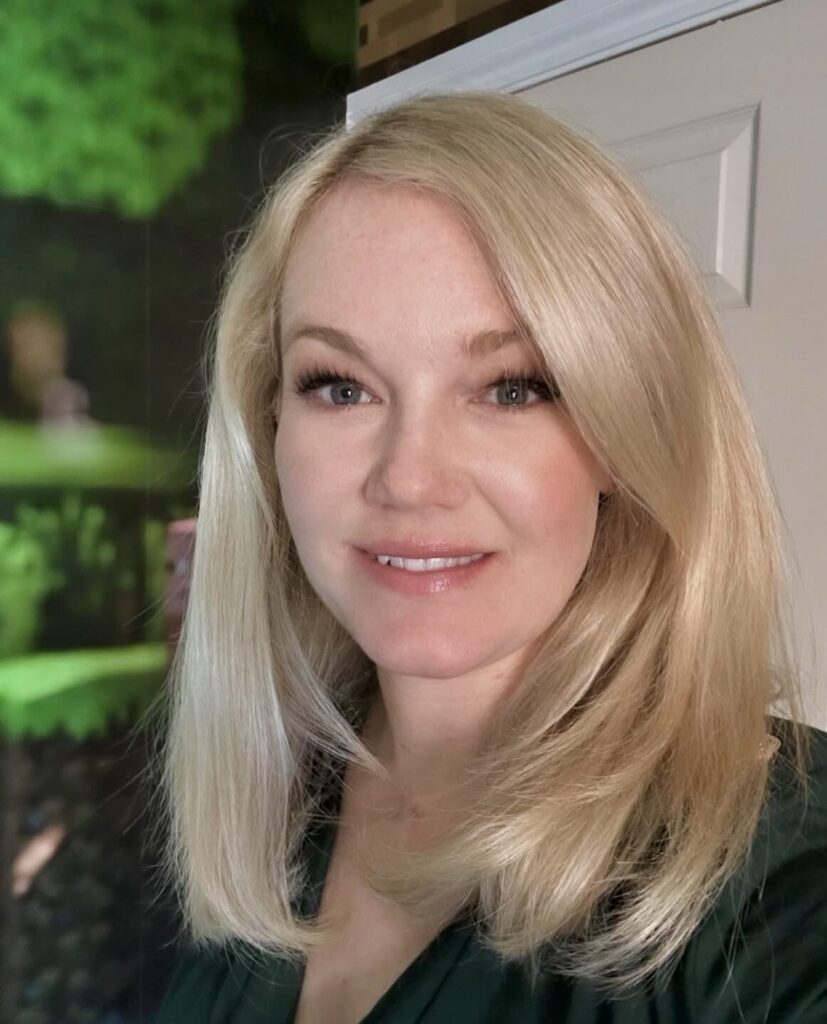
My husband and I are a great team. We both hold senior positions in our respective companies but we work together to balance a range of demands. He’s usually the one who is preparing the kids for school by ironing uniforms and preparing PE kits, but I’m the family organiser and entertainment officer.
My daughter is now independent in getting ready for school and getting herself to the bus stop on time, which takes away a lot of the pressures we had when the children were younger. She’s often popping in to see me as I get ready, to ask for tasks to be done, things to be bought or dates she wants to remind me of for school events.
My son has developmental language disorder, which impacts his memory and ability to routinely organise himself. So while I’m getting myself ready and listening to my daughter, I’m also prompting my son and husband frequently on what’s ahead in my son’s day, like whether he has Minecraft club or any revision he needs to do a final read of.
Clearly, my mind is whirring right from the start of the day with my own to do list, and everyone else’s.
My role involves working in different locations, so I use a mix of trains, planes and my car. If I commute by train, I use the time to action emails or top priority tasks. If I travel by car, I use the time to imagine, plan and creatively think, alongside listening to music or an audiobook or podcast.
My base office is a good hour and a half from home, so when I drive there and back I have a lot of available time that I try to use wisely. It also gives me time at the end of the day to process things before I’m in the thick of family life when I reach home.
I’m responsible for shaping and delivering the national people strategy at Pick Everard. I’m a senior adviser to the executive team, providing direction on what the people and culture team will do next to support delivery of the business strategy.
I’ve never lost my love for coming up with creative HR solutions, so I still assign key projects to myself to take forward. It is a challenge to ensure I have the time capacity to give my best to both planning and delivery but I get so much out of coming up with new ways we can take the team forward.
On the strategy side, a typical day, or week, involves attendance at senior level meetings such as our Executive Board meeting and our quarterly business meeting. I’ll provide an update on priorities such as talent acquisition, retention, structural developments in the business, leadership capability and our equity, diversity and inclusion strategy. I’ll discuss any shift in priorities or approach and we’ll also discuss any investment in time or budget that is needed.
Employee listening is really important to me and in a multi-disciplinary business with lots of different personalities working in different fields of expertise, it can be challenging to respond to every need. But just as they bring their skillset to the table, so do I draw on my own specialist knowledge and experience to strengthen our position as a great place to work. When I meet with our national directors, I balance their feedback with the direction coming from the executive board.
I make sure I have lunch as it’s important to take a few minutes’ break in the day and an opportunity to refuel. It tends to be pretty transactional – a quick nip out to buy a baked potato, salad or sandwich. I’m all about the quick eats. Sometimes the middle of the day is the best time I have to action emails and respond to the team on queries, so I tend to juggle this around lunch.
Around once a month we have a team lunch where we’ll head out in Leicester to a café or pub of the team’s choice and we’ll spend time together socially, catching up and connecting or celebrating a personal achievement of a team member. At home, my lunch break involves a bite to eat but also walking Winnie, to ensure we both get the exercise we need.
There’s lots of innovation already underway in the HR world beyond AI – the flexible workforce, people analytics and skills-based workforce planning. The next big breakthrough, however, needs to be in the role of HR in sustainability and the creation of purpose-led workplace cultures.
Our young professionals place different demands on us. They want to see more diversity in the business and tangible initiatives that show a commitment and impact. They look for demonstrative ethical leadership and proactive social value efforts. Ultimately, environmental, social and governance (ESG) goals will need embedding in people strategies.
Working closely with sustainability experts and social value leads will be important to ensure this culture shift is successful. We’ve already embarked on integrating these values into our strategies but it’s still early days. Young professionals expect their work to have a positive impact and be connected to a larger purpose. No longer is it enough to offer high reward packages. Organisations need HR’s support in thinking differently about giving something back.
No matter what stage you’re at in your career, it’s important to focus on continuous learning. HR is so diverse and we’re working in a constantly changing landscape so regularly looking at your knowledge and skills gaps and committing to your continuous professional development through research, online learning, podcasts, workshops and formalised education or training opportunities is crucial. This will arm you with the latest knowledge and ensure you can be confident and forward-thinking in your approach.
I see so many HR professionals starting their relationship and engagement with their business through HR processes before they even understand the business environment and climate they’re working in. My advice is to commit to developing sound business and commercial awareness. Understand how a company’s products or services are developed, delivered and how it makes a profit. Consider how your HR work connects with the business strategy and helps the overarching goals be achieved.
Grab with both hands opportunities to take ownership for specific initiatives. These should be initiatives that you can shape and drive forward, bringing value to your business but also provide to you visibility and opportunities to network and strengthen relationships with key stakeholders. Not only will you be known for being proactive and driving great results, but you’ll also be visible to decision-makers.
I lead 16 HR professionals who support the delivery of the people strategy. Our big objectives include reducing the time to hire, strengthening the employer brand, increasing retention and driving productivity and efficiency through changes such as agile working, a rewards offering and a development path for our future leaders.
The team also provides daily operational HR support to the 800 staff we have across our 13-office business, and I’m also responsible for the national business support team. These teams are autonomous on operational matters and they have clear agendas to drive forward but the dialogue between us is constant throughout the day.
I enjoy shaping new ideas and seeing them through to delivery. At the moment, I’m reviewing our approach to leadership development and performance, considering everything from our onboarding and probation, leadership appraisals and career pathways to executive coaching and peer group learning. One of my goals is to create a framework for career growth for those in leadership roles. I believe there should be more conversations around career aspirations for people in these positions as there’s so much additional potential to unlock with the right support.
More often than not I will get totally engrossed in what I’m doing; it’s the mix of creativity and achievement that keeps me going. Providing I have moments in the week to do some strategic thinking or shaping of something new, I find this really energy-giving. I engage my team as much as possible then in developing that further and planning for implementation and indeed generating their own ideas.
I think there’s a big misconception in business that HR is a shoulder to cry on when you have a problem. Handling complaints is only one small part of what we do, and often there’s a risk that HR becomes the place where people offload, whether it’s a personal or professional issue.
If there is an issue that needs HR intervention, then I find if people come to us open about discussing and finding solutions then they are more likely to achieve a positive outcome promptly. We quite often have to be the voice of reason and so I like to keep a check on my team, to make sure they’re not getting bogged down and are able to balance the bigger picture with day-to-day issues. It’s important they also have someone to turn to and the right support in place.
I tend to stay busy right up to the point of logging off for the day. I spend a few minutes right at the end of the day looking at what’s coming up in the days ahead. I’m always carefully planning my time and identifying the slots to get actions completed in and around meetings, but these few minutes at the end of the day prove really valuable in assessing whether any priorities have shifted or if I need to approach something differently as a result of discussions I’ve had.
I carry a lot in my head but at the busiest of times, I’ll write task lists to prompt me on the most important matters the next day. The task list helps me re-focus on priority matters whilst navigating new current issues.
I am a neurolinguistic programming (NLP) practitioner, a technique which I use in lots of different areas of my work and home life. I believe the language we use influences the way we think and the results we achieve. In business, that can help me to present new ideas to our Executive team, better understand thought processes and behaviours and help to turn negatives into positives. My qualification includes elements of timeline therapy and hypnotherapy which are helpful to support people who are going through difficulties on which direction to take or experiencing mental health issues but it’s also very powerful in supporting coaching of our leaders.
The techniques facilitate the release of negative emotions to help empower us to achieve our goals. It examines recurring patterns and past experiences and helps individuals to identify and overcome limiting beliefs. I have found NLP really interesting tool to boost confidence and positivity in myself and in others and something I definitely would recommend others to explore.
Wellness is an area I’m particularly passionate about and Pick Everard provides time to me to undertake the role of trustee with the Pagabo Foundation, a charity that raises funds to provide education and awareness of mental health in the construction industry and works to unite key partners in breaking down barriers from the top down. My role is to work alongside the chair and fellow trustees to make key decisions regarding fundraising and investment opportunities that will better support improvements in mental health across the industry.
I’m often working beyond my hours. There’s a couple of reasons for this. Firstly, sometimes it’s due to work demand or I may have a series of deadlines all falling at the same time. A second reason for working later is because I’ll be really enthused about the projects and initiatives we have underway. I like to work in line with my energy levels and interests as much as possible, so if I’m feeling really engaged in a project and have the time and energy to push it forward, I will harness that to get it finished.
Evenings in our family are also busy. The children have commitments outside of school, including attending Explorers, Scouts, swimming lessons and tutoring, which we take them to.
Last year I completed a masters dissertation to take my postgraduate diploma up to a Masters in Strategic HR Management. This year, I’m taking more time out to simply relax, re-engage with running, see friends and spend time with the family. I eat out at least once a week.
My husband is the family chef. We eat a varied diet and love foods from around the world. We’ll enjoy anything from curries to enchiladas to pasta dishes and a good, classic Sunday roast. We aim to eat together as a family five times a week.
Walking Winnie is a perfect way to relax and transition out of work. Being a young border collie, she needs plenty of fresh air and exercise. She also loves a good fuss. We live in a lovely village where we’re surrounded by water and the countryside so there’s plenty of great walks to do.
It’s important to have time together as a couple and my husband and I enjoy having a few hours together in the evening, watching TV or making plans. On a busy evening, we aim to have at least an hour of TV, watching a gripping drama, then it’s a final check on the pets and putting Winnie to bed and heading up the stairs between 11.15pm and 11.30pm. Although Winnie is usually already asleep at our feet by then.
I fall asleep easily, which is great. There will be one thing in the day that will come to mind as I settle down for sleep and I process that for 10 minutes while I lie relaxing. Soon enough, though, I drift off to sleep.
But it’s not unusual for me to wake four or five hours later. I go through spells when I have really good sleep and spells where it’s disrupted; but I know eventually the disrupted nights will pass.


William Furney is a Managing Editor at Black and White Trading Ltd based in Kingston upon Hull, UK. He is a prolific author and contributor at Workplace Wellbeing Professional, with over 127 published posts covering HR, employee engagement, and workplace wellbeing topics. His writing focuses on contemporary employment issues including pension schemes, employee health, financial struggles affecting workers, and broader workplace trends.
- William Furney

- William Furney

- William Furney

- William Furney