


HR practitioners are always looking for ways to increase employee engagement, encourage innovation, drive individual performance and enhance the bottom-line. One way to achieve all of these things is to shift the organisational culture and practices from the bureaucratic to the dynamic.
Bureaucratic organisations are well-suited to a stable business environment. With centralised decision-making and standardised procedures, they can scale quickly, reduce costs, generate profits and satisfy mass needs. A key characteristic is that problems aren’t solved on the front lines where they actually occur, but in the executive suite. A few smart people make all the important decisions. Silos exist and these bring with them complex territorial issues whereby one unit’s success might be at the expense of another. Turf wars are not uncommon. The manager’s job tends to be focused on implementation, monitoring, motivation and control over others.
Given that a stable business environment is a thing of the past, this type of organisation has to change to become more dynamic.
 |
Get our essential weekday HR news and updates.
|

Dynamic organisations offer a more flexible workplace. Employees typically work in cross-functional teams and they are empowered to innovate, to solve problems and to work where they are most efficient (which may be at home or during non-traditional work hours). Our research shows that this way of working makes employees more committed to their jobs because they are typically given more challenging and complex assignments. The manager’s job is to facilitate smart, creative solutions and to make sure employees are contributing at their highest level and living up to their potential.
Making the shift
So what can HR practitioners do to bring about the cultural transformation from bureaucratic to dynamic? Our research, conducted over the past 30 years, suggests that there are seven realms on which to concentrate. Taking our cue from Aretha Franklin, we’ve grouped these realms under the acronym R.E.S.P.E.C.T. This stands for:
• Recognition – In dynamic organisations, employees are given ‘a pat on the back’ and their views count. Essentially, each individual wants to be recognised and appreciated as a valued team member – particularly by the person who should be most familiar with their work: their line manager. HR practitioners can help by encouraging managers to recognise and appreciate people for the work they do. Managers need to close the gap between employee actions and when those actions are recognised. They shouldn’t ignore employee performance until the annual review – and they should never focus solely on criticism.
• Exciting work – In dynamic organisations, the jobs are challenging, interesting and fun. Every employee wants a sense of accomplishment and they want to feel the time they’ve spent at work has been worthwhile. According to our research, employees are significantly more likely to feel excited about their work if they are learning something new, or if they’re involved in a pioneering project or if they are empowered to operate with autonomy. HR practitioners should encourage managers to discuss with employees what they like and don’t like about their jobs. Managers should aim to provide variety where possible.
• Security of employment – All employees want job security. They want to feel confident about their organisation’s future and they want stability and steady work so they can meet their financial obligations. HR practitioners must ensure that managers understand this fundamental need. Managers should be persuaded to consider the morale, welfare and well-being of their teams. If they can empower employees and give them a say in how they work, it will create trust and provide a greater sense that employees are expanding their skill sets and controlling their own destiny.
• Pay – In dynamic organisations, employees are compensated fairly for the work they do and the contribution they make (through base pay, bonuses and benefits). The important word here is ‘fair’. We all want to feel that we are being treated fairly and that our performance is evaluated on merit. HR practitioners can provide an annual compensation and benefits review, to underline how much the organisation is investing in each individual. Allowing employees time off can compensate for lower pay.
• Education and career growth – In dynamic organisations, employees are given opportunities to develop their skills and to advance their career. HR practitioners can help by ensuring that resources are available for the necessary training and by encouraging managers to offer employees ‘stretch assignments’ in which they’ll learn new skills, thereby increasing their engagement and job security. HR should also facilitate formal and (at least) annual career discussions with employees to determine their goals and aspirations. Managers should be encouraged to give people the autonomy, authority and encouragement to use their skills and to do their jobs in their own way.
• Conditions – We don’t work in a vacuum; what happens around us matters. All employees want a well-equipped environment that is comfortable, healthy and safe. For most, the social working conditions are even more important than the physical conditions. HR practitioners should encourage managers to arrange team social interactions that will promote goal alignment and teamwork. Managers should also be encouraged to listen and respond to employee complaints and to help individuals achieve their own work-life balance.
• Truth – Finally, employees want to be told the truth. They want to work for honest and transparent managers who act with integrity and who communicate openly and directly. HR practitioners should encourage managers to provide honest feedback and set clear goals. Regardless of how bad things are, employees should always be told the full story. They’ll know if things are bad. Managers need to understand that lying will only undermine their credibility.
By concentrating on these seven realms – Recognition; Exciting work; Security of employment; Pay; Education and career growth; Conditions and Truth – HR practitioners can help to bring about fundamental cultural change.
The good news is these things don’t cost a lot, if anything, to implement. For example, providing recognition and telling the truth cost nothing. Finding exciting work just requires managers to be in touch with what motivates each individual. It’s simply a case of encouraging managers to make the necessary effort.
Is it worth it?
Our research shows that organisations that embrace these principles outperform those that don’t. On average, their employee engagement level is 117 percent higher; their operational performance is 64 percent higher; their customer satisfaction level is significantly greater and their ‘return on assets’ is up to ten times higher.
Isn’t it time your organisation made the cultural transformation to become more dynamic?
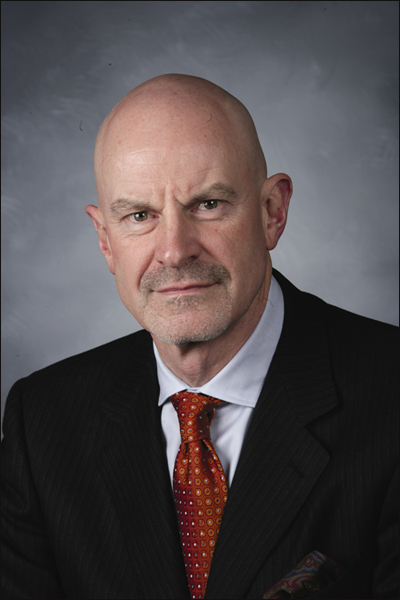
Dr Jack Wiley is executive director of the Kenexa High Performance Institute and co-author of ‘RESPECT: Delivering results by giving employees what they really want’. More information on the book is available at www.respectthebook.com


Pamela Flores is an events professional with experience at Symposium Events, a UK-based conference and events organization. She has worked in editorial and event coordination roles within the HR and expatriate management sector, contributing to the organization of major conferences including the Expatriate Management and Global Mobility conference. Her background spans online editorial work and events management within the professional conference industry.
- Pamela Flores

- Pamela Flores

- Pamela Flores

- Pamela Flores



