



What does it take to be a Top Employer? And how has this changed over time? Top Employers Institute has been publishing listings of its certified members globally for 30 years – and for 25 years here in the UK – and recently celebrated these landmarks with a big virtual Global Certification Celebration.
As someone representing one of the nearly 1700 Certified Top Employers worldwide in attendance, I was naturally curious to find out how a quarter of a century had changed our understanding of what it takes to be a Top Employer. Has the concept of HR best practice changed – and if so, how? More recently, how has Covid-19 impacted on our understanding of what HR excellence looks like? And what will now change again in HR for Top Employers in 2021 and beyond?
A little about our own experiences. I work for Konica Minolta, a data and IT services company operating in 50 countries. We have now completed our fourth year of certification with the Top Employers Institute. To us, the value of the certification process has evolved over the years. To start with, it helped us across the board in evolving our HR strategy and approach. And in the last 12 to 18 months, it has been more like a laser beam, focussing on specific areas where we need to invest our time and resources. A little more on that later.
Then
 |
Get our essential weekday HR news and updates.
|

What is clear to us is that the certification process has helped many businesses increasingly over the years. Way back in 1996, the original Top Employers report for the UK focused on one or two relatively simple issues. The introduction to the report asked: “What makes this company an attractive one to work for, and what would it be like to be a part of it?” To be able to answer these questions today is a given for any business valuing its talent. In other respects, too, the first report shows how far organisations have come. It notes that while a company’s culture, values and style are all-important, it is “a subject little covered in business books.” Today, it is difficult to find a business book that does not recognise the centrality of people to business performance.
The first published UK list had many names that remain with us, such as BT, M&S and Shell. Many others still exist, albeit in a different form, following mergers or acquisitions over the years. Only a few – such as Littlewoods and BHS – have disappeared altogether. While the names may be familiar, their attitude to HR has changed completely. Back in the 1990s, companies were focused on the control of all resources: HR was about alignment and standardisation. Now, the perspective is more holistic – less about the balance of power between employer and employee and more about their collaboration and partnership.
The first UK Top Employers list was different in another fundamental respect. It was subjective, based on submissions reviewed by a panel of experts from the HR and business world. A quarter of a century on and the list is driven by data – lots of data. The Top Employers Institute today benchmarks over 600 HR practices, spread over a wide range of HR topic areas across the employee lifecycle.
Now
This evolution to data-rich insight has helped us in Konica Minolta greatly. For example, we have strengthened our employer brand by benchmarking our performance against the highest standards. Winning and keeping top talent had always been a key business imperative and the Top Employers data showed us that the quality of the candidate experience was a key differentiator for onboarding practices. We saw that, with our own knowledge of technology and digital transformation, we had a big opportunity to improve radically on our onboarding and induction processes. And armed with this insight, this is exactly what we have achieved.
The Covid-19 pandemic has caused a big rethink in every Top Employer about what HR best practice looks like. Top Employers have had to adapt at scale and speed to blend people and technology more effectively. Businesses have somehow managed to shift entire workforces to remote working within days of lockdown. This has been an amazing achievement, but the consequences of this for those with, for example, caring responsibilities or those suffering illness or isolation has meant that health and wellbeing has moved centre stage for HR. Despite all of the uncertainty created by the pandemic, Top Employers have been able to find new ways to step up and meet these and other challenges.
Next
What do we need to do next in HR to prosper in 2021 and beyond? The Top Employers Institute’s HR Trends 2021 report – based on evidence from the 1,691 high-performing, progressive employers around the world – sets out three areas currently being addressed by those in HR performing at their best. These are to:
- Navigate the new world of work – After the global health crisis, people and business need to map out new ways of working together. How can we keep our teams happy, healthy, and hungry to perform? HR now needs to redesign work to align business goals with healthy people practices.
- Deal with Disruption – We will need to learn to deal with ongoing disruption. Businesses face further periods of volatility and Top Employers must tackle the twin challenges of responding well as a business while ensuring teams continue to work together effectively.
- Reinvent the role of HR – The changes described are impacting the role and scope of HR itself. When we look back over our 4 years as a Certified Top Employer, let alone the 25 since Top Employers began in the UK, HR has already moved significantly to an increasingly strategic role. And now we can move on from being business partners to business makers.
For all Top Employers – the opportunities for HR are huge. The coming period is a chance to build a higher profile for strategic HR, to go above and beyond ‘functional excellence’ and to find new ways to add value. The challenge is there for us – and we must take it on.
HR Trends Report 2021 from Top Employers Institute presents the latest in HR strategies and people practices from leading organisations around the globe.


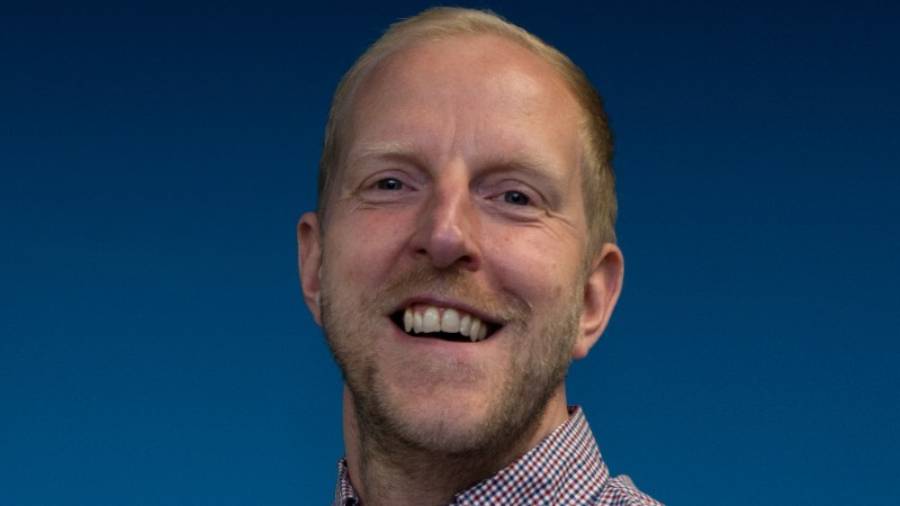
Richard Kershaw has been Workforce Planning Partner working for Konica Minolta, for the last seven years. He specialises in helping them get the most from their talented people. This means ensuring they have the right people, at the right time with the right skills to support their business objectives, people agenda and digital business transformation. He uses people analytics and insight to make recommendations for the business to act upon.


