




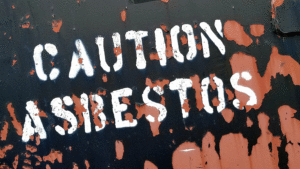

Asbestos is seen by many as a problem of the past – an issue of the mid-to-late 20th century that employers should no longer worry about. This could not be further from the truth.
As we approach the 20th anniversary of the total ban on the sale, importation and use of asbestos in the UK on 24th November, we reflect on how much of an issue asbestos still is today. Thousands of families across the UK are devastated by the impact of historic asbestos exposure at the workplace, despite employers still having a legal responsibility to safeguard workers from exposure to the deadly substance.
What types of asbestos diseases are there?
Exposure to asbestos fibres will put anyone at risk of developing an asbestos disease later in life. It can take up to 60 years for the symptoms to manifest, which can vary from breathlessness to a wheezing cough, trouble walking and sleeping, and more. The illnesses can vary from relatively harmless to fatal. Here are the five recognised asbestos-related diseases:
 |
Get our essential weekday HR news and updates.
|

-
- Pleural plaques
- Pleural thickening
- Asbestosis
- Lung cancer
- Mesothelioma.
Mesothelioma is the worst of the asbestos-related diseases and is fatal, with many people dying within months, or even weeks, of being diagnosed.
What industries are most at risk?
Certain professions, such as construction, shipping and other heavy industry, put workers at a higher risk of asbestos exposure, as it was used in abundance to lag and insulate pipework, boilers and the indoor spaces themselves. This is why asbestos predominantly affects men, as they were almost exclusively employed in the roles during the mid-to-late 20th century.
However, asbestos was – and continues to be – present in any schools, hospitals and offices that were built or renovated before 1999. Anyone who worked in these premises may have also suffered second-hand exposure to asbestos, for example working or playing near asbestos removal teams, or if workers brought home asbestos fibres from their overalls into their homes. These cases tend to affect men and women much more equally.
What laws are in place to protect employees from asbestos exposure?
There are two main regulations that employers must abide by:
1.The Health and Safety at Work etc. Act 1974
2.Control of Asbestos at Work Regulations 2012.
While both regulations are pivotal for the protection of workers’ health, the latter specifically deals with exposure to Asbestos Containing Materials (ACMs).
The Regulations place a legal duty on the “duty holder” to manage ACMs. Regulation 4 confirms the “duty holder” includes those who have “an obligation of any extent in relation to the maintenance or repair of non-domestic premises or any means of access or egress to or from those premises.”
Regulation 11 confirms: “Every employer must prevent the exposure to asbestos of any employee employed by that employer so far as is reasonably practicable…”
The Health and Safety Executive (HSE) states: “The duty to manage asbestos is directed at those who manage non-domestic premises: the people with responsibility for protecting others who work in such premises, or use them in other ways, from the risks to ill health that exposure to asbestos causes.”
Further, Regulation 3 confirms where an employer has a duty in respect of his employees, the employer is also under “a like duty in respect of any other person, whether at work or not, who may be affected by the work activity carried out by that employer….”
If an employer fails to comply with these regulations, they may be liable to criminal and civil prosecutions.
Key points for employers to follow
These are some key steps that employers must follow to ensure they are compliant with the regulations in force. An employer should:
- Identify any ACMs in buildings built before the year 2000. If there is uncertainty on whether something classifies as an ACM, the employer should assume it is and manage it accordingly;
- Maintain a record of the location and condition of ACMs on site, including those that are presumed ACMs
- Develop a management plan that outlines how the asbestos risk is going to be managed and ensure the management plan is put into action;
- Review and assess the risks from actual or presumed ACMs regularly, so any changes in the condition can be identified and managed;
- Review the asbestos management plan regularly (eg. to take into account changes of the structure or use of a building);
- Ensure anyone who may come into contact with ACMs is provided with relevant information;
- Be aware of how to deal with unintended exposure to asbestos.
Asbestos – moving forward
Despite the developments in the law on asbestos, the toxic substance continues to lay dormant in a number of workplaces across the UK. Employers need to ensure they are complying with the law and protective staff from asbestos, especially during periods of removal.
The Health and Safety Executive has a significant amount of information online that provides a clear checklist of what employers should do with asbestos, so there is no excuse for any employer who fails to comply with the laws on asbestos in the workplace.


Helen Tomlin is a specialist asbestos solicitor based at Thompsons Solicitors’ Leeds office. Identified by the Association of Personal Injury Lawyers (APIL) as one of only a very limited number of specialist asbestos litigators in the Yorkshire area, Helen works in close association with regional asbestos support groups to ensure that clients in her care are given expert guidance on their entitlement to benefits among other issues.


