


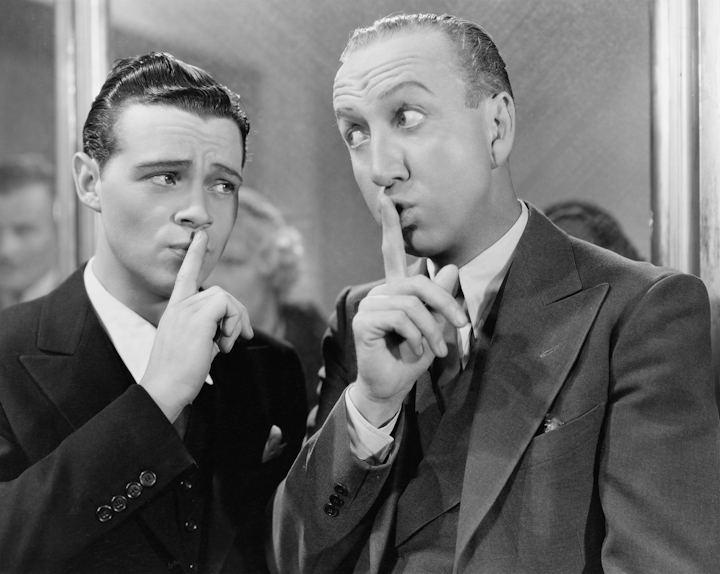
It was Renaissance political theorist Machiavelli who, in his treatise ‘The Prince,’ famously said: “keep your friends close and your enemies closer.” His advice to leaders was penned more than 500 years ago but the concept is alive and well thanks to an expression that Machiavelli wouldn’t have heard of but which is widely used up today; ‘frenemies.’
Frenemies in the workplace can be defined as friends who are also enemies – the people employees encounter in their everyday lives. The people who are either enemies pretending to be friends or people who are friends but also their rivals. Perhaps they’re line managers; they’re definitely the people that staff may not necessarily like but which they discretely acknowledge and decide to keep close knowing that their careers may depend on knowing them. Frenemies play the long and often unsaid political game.
But, although the concept of frenemies is well known, HR functions are wrongly encouraging the very opposite of this. They think it’s good for business but, in reality, it’s the worst thing they should be doing.
 |
Get our essential weekday HR news and updates.
|

A Flawed Policy
HR departments seem to work hard to ensure their workforce connects with each other in a ‘genuine’ relationship centric way. It’s this connection, they believe, that creates harmony, a better culture and groups of individuals more willing to go the extra mile. But, whilst on the surface this may appear to be the correct policy, it’s actually flawed.
Companies are so keen to be seen to develop deep and meaningful relationships amongst their colleagues and between management that they put staff through team building days, encourage more social time with colleagues and engender a friend-based culture. But whilst it’s accepted that good working relations are important, they’re only important up to a certain point.
Many leaders are deeply sceptical about really close work friendships. Rather than develop untrusting relationships, I think one option is to re-read The Prince and bring back the concept of the frenemy. Most importantly, this is a call that the HR community should take particular heed of.
The reason is simple. Let’s say that you, in HR, have formed close friendships with colleagues at work. But then let’s say it’s your and the rest of the HR team’s responsibility to have to deal with (and potentially remove) that person from the organisation. Is your ability to do your job going to be impacted? Are you truly going to work in the best interests of the organisation you work for? Or are you instead going to try and get the best deal for that affected person because they are your ‘friend?’ Even if you say the former, I suspect your loyalties may be divided.
The answer to these questions is obvious. Without being frenemies, companies are following a dangerous path if they let management (in this case HR management), form relations with employees that are as strong as what some might have with their ‘real’ friends outside work. If you work in HR, the boundaries have to be clear. But, from my observations, HR is so intent on building ‘relations’ and ‘relationships’, that it rarely pauses to think about how destructive these things can be when difficult discussions are needed.
Chinese Walls
Everyone in business needs to be aware that yes, people become close. That’s fine; to a point. But, if you work in HR, you need to build Chinese walls to avoid this happening to you so that you can create a proper barrier to the possibility of conflict.
I believe that only by becoming a frenemy with staff can HR have a professional way of removing themselves from the personal links they may have. In this way, the concept of having ‘awkward’ conversations need not apply because they become business-led conversations. Without playing this role, there is too much opportunity for HR to be drawn to the side of an employee when they’re supposed to be working for the business. Without being a frenemy they can all too easily fall into the “I didn’t want this to happen, but I’ve been told to…” mentality. It’s weak and it doesn’t help the situation when settling disputes in a non-conflict of interest and professional manner – which is what they are ultimately required to do.
But is it really possible for a profession, largely built on developing personal relations with staff, to act this way? I believe that it’s not just possible, it’s absolutely essential for the good of the reputation of HR. I’m not suggesting HR has to be rude or unapproachable – deliberately creating a function that employees feel they can’t come to – but that they should consider maintaining the appropriate arms-length distance that enables them to do their jobs properly and professionally.
HR frenemies will still be able to manage, but it is specifically because they are frenemies that they will be able to keep the professional distance that is needed. What every HR professional needs to ask themselves is just how much of a frenemy they can be; do they really know when it’s appropriate to build those Chinese walls? It’s up to them to find out where they sit on the friends/enemy scale and whether this is preventing them from doing their jobs to the highest possible standard.
Josh Sunsoa is the founder of business restructuring and executive terminations consultancy, Sunsoa & Co


