



Diversity, Equity and Inclusion (DEI) has become a cornerstone of many organisations’ HR strategy. But is it working? When we take a closer look at our workplaces, can we truly say they are diverse, equitable and inclusive?
According to Deloitte’s 2024 Global Human Capital Trends report, it seems the answer is no. The report found that while 97% of HR leaders say their organisations have made changes that are improving DEI outcomes, only 37% of workers strongly agree that they’re making progress.
This data speaks to an underlying issue stunting the efficacy of current DEI practices – there is a lot of talk, but not enough action. The way organisations have approached DEI until now is a simplified approach, with quick fix quotas and performative efforts that look good on the annual report, but only provide superficial and short-term change.
For HR professionals, understanding the root causes of this performative DEI is crucial for actualising meaningful cultural transformation in their organisations. So, what is holding true DEI progress back, and how can HR tackle this?
 |
Get our essential weekday HR news and updates.
|

Back to basics: What DEI is and is not
While DEI is a widely used term in workplaces today, the acronym has become a ‘buzz word’ and is increasingly used without a true understanding of the intended meaning of the individual words. So, let’s first establish what DEI is and is not.
DEI is not an ideology or charity, nor is it about attacking or replacing privileged identities or hiring ‘less qualified’ candidates to fulfil diversity quotas. It is not a zero-sum game where one group gains at the expense of others, nor is it about making people feel shame or guilt.
Rather, in its simplest form, diversity is about valuing uniqueness, equity is about fairness and inclusion is about belonging. Ultimately, DEI is about dismantling and rebuilding systems that unfairly favour some and not others to ensure a level playing field, so that those who have the competencies have access and a chance to be considered for the role. This requires HR to undergo a deep transformation to ensure processes and policies are truly fair.
With this clarity of what DEI is and is not, we can dig deeper into how it is misunderstood in the workplace, and what HR can do about it:
Our view of diversity is too narrow
When we refer to diversity, we refer to the myriad of human differences in perspectives, backgrounds and experience that should be represented in our workplaces. Yet DEI is often understood too narrowly. The focus of diversity at work tends to be on singular dimensions, like ‘women’ or ‘the LGBTQ+ community’ or marginalised ethnic groups taken in isolation, rather than with an intersectional view of diversity.
Imagine that we all have a ‘diversity thumbprint’. This thumbprint is made up of multiple dimensions of diversity that include – among others – gender, sexual orientation, age, disabilities, educational background, neurodivergence, race, ethnicity, religion, marital and parenthood choices and socio-economic backgrounds. Some of these dimensions are visible while others are invisible; some can even be both. These dimensions intersect or weave together to form our own unique identity.
DEI work is about improving the culture and systems of the whole organisation in a way that includes all and is about not just some, but all of us. As such, it is important to emphasise that this intersectional approach is fundamental to understanding the true range of diversity in the talent of our workplaces. Until we embrace this complexity and intersectionality, our progress in nurturing inclusive, diverse and equitable workplaces will continue to remain limited.
To adopt a more holistic, intersectional approach to DEI in the workplace, HR can begin by using self-identification surveys that collect employee data to create DEI activities that address the intersectional needs in their organisations. These surveys can identify where DEI should be embedded in all aspects of organisational life, from systems and structures to policies, practices and culture.
We lack the knowledge, vocabulary and confidence to be an ally
When it comes to DEI, the subject matter and vocabulary are new to many of us. One additional challenge is that the terminology and content in the field is constantly evolving and growing. As a result, we may feel that we lack the knowledge, vocabulary and confidence to be an ally; afraid of being shamed and attacked by the very groups of colleagues we seek to support.
This anxiety and fear of not knowing enough about a topic as complex as DEI can keep us from engaging on it with others. To combat this, we must seek to unlearn and learn what we know or think we know about others and DEI. We can achieve this by being curious and seeking help by asking others questions like:
- ‘I would like to know more about this topic, can you point me in the right direction for some articles, podcasts and authors whose content I can read/listen to?’
- ‘Could you tell me more about this? It is not a topic I know a lot about and would love to know more.’
- ‘I’m going to take some time to understand more about this before we engage on it. Please give me some time to do my own research and then we can have a conversation about it.’
Once you have made the effort to educate yourself, take time to deeply reflect on what you have read/listened to. Dwell on it and go deep. Allow the know-how to be internalised. That’s when it has the potential to change our attitudes and behaviours.
Fostering fairness into the future
Meaningful cultural transformation requires mindset and behaviour shifts, together with broader systemic change. And DEI requires us to change our own ways of thinking, how we see others and interact, and how we make decisions. This is not simple. It is complex. And it is uncomfortable. But not impossible.
By broadening the view of diversity through an intersectional understanding of the workforce, coupled with the curiosity to develop knowledge, vocabulary and confidence around complex DEI topics, HR professionals can affect real change in their organisations. In doing so, HR will achieve the fundamental purpose of DEI – to foster fairness and empower everyone with the opportunities to succeed.


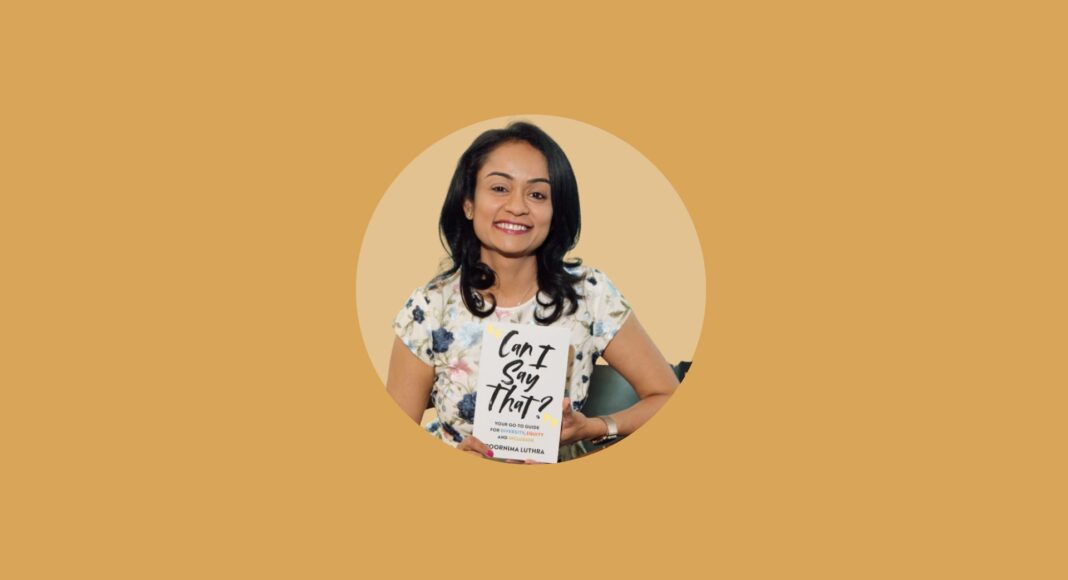
Dr. Poornima Luthra is a globally recognised expert on developing inclusive workplaces, a leading academic, Fortune 500 consultant, keynote speaker and award-winning author of Can I Say That?


