


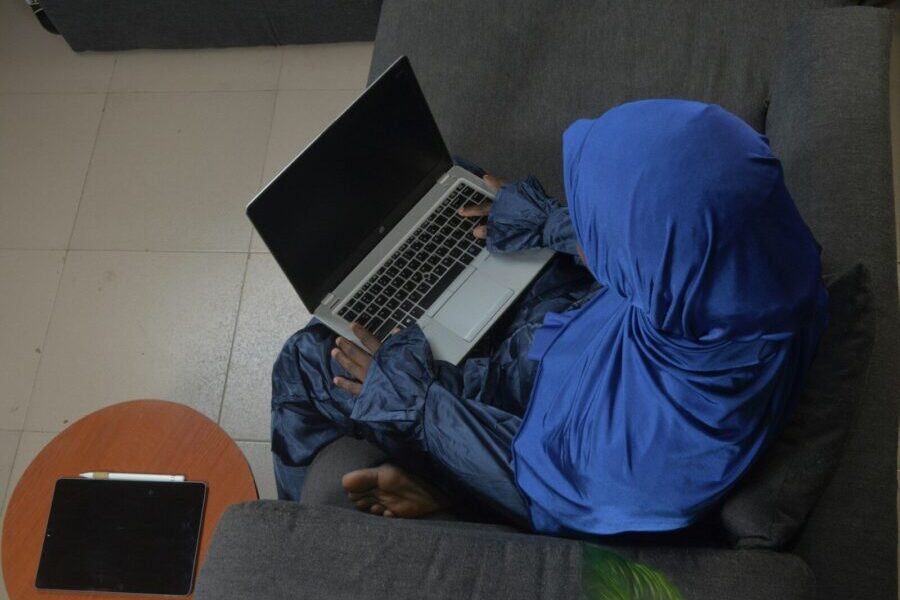

Recent remarks by Kemi Badenoch, suggesting that employers should have the right to ban the burka in the workplace, have brought renewed attention to the legal implications of workplace dress codes.
The Equality Act 2010 offers protections for religious expression, and employers must take care to ensure their dress code policies comply with this framework.
Paul Kelly, Partner and Head of the Employment team at Blacks Solicitors, says that any decision that could impact an employee’s ability to manifest their faith must be justifiable and proportionate; if not, it could lead to legal and reputational consequences.
Under the Equality Act 2010, religion or belief is classed as a protected characteristic. This means individuals have a legal right to express their religion, including through clothing. If an employer imposes rules that discriminate against this right, they may face claims of discrimination or victimisation.
 |
Get our essential weekday HR news and updates.
|

However, the law does allow for restrictions in limited circumstances. For example, in settings such as factories or sterile medical environments, health and safety concerns may justify tailored dress policies. A generalised or unexplained ban on religious garments, however, is unlikely to be lawful.
Case law offers clear precedent
One of the most referenced cases in this area is Eweida v British Airways Plc, which was later heard as Eweida v UK at the European Court of Human Rights. In that case, a Christian employee was banned from wearing a visible cross at work as it conflicted with the company’s uniform policy.
While British courts initially rejected her claim, the European Court found that British Airways had infringed on her right to religious expression. It held that maintaining a corporate image was not sufficient justification to override her individual rights. The case remains a critical reference point for any organisation drafting or enforcing dress codes.
Kelly says that employers should interpret this judgment as a reminder to balance business interests with employee rights. Even if a uniform or dress policy exists, it must be applied in a way that does not disproportionately affect those of particular faiths.
Assessing the business need
When reviewing or enforcing dress code policies, employers must consider the rationale behind the rules. Kelly advises that HR teams assess whether the policy serves a genuine business need, such as safety or hygiene, and whether it places an undue burden on certain employees.
“Engaging in consultation with employees and keeping a record of these discussions are advisable practices to ensure openness and demonstrate adherence to legal requirements,” Kelly says. “If an employee raises concerns about a dress code on religious grounds, employers should first engage in respectful, open dialogue to understand the issue.
“They must then consider whether the policy is essential and if reasonable accommodations can be made without undermining the legitimate aims.”
Any refusal to allow religious clothing must be backed by specific, demonstrable reasons. Blanket rules that are not clearly justified risk breaching equality legislation. Failing to accommodate religious dress without valid reasons may expose employers to legal claims, including discrimination, harassment or constructive dismissal.
“These claims are not only costly to defend, but can cause significant reputational damage. In an era where corporate responsibility and inclusion are closely watched by the public, mishandling religious expression can have wider reaching consequences,” Kelly adds.
“Employers who are faced with such claims also risk reputational damage arising out of the negative publicity that can follow, which can in turn lead to a potential loss of customers or clients who value inclusivity.”


Alessandra Pacelli is a journalist and author contributing to HRreview, where she covers topics including labour market trends, employment costs, and workplace issues.
- Alessandra Pacelli

- Alessandra Pacelli

- Alessandra Pacelli

- Alessandra Pacelli




