



A changing work environment
Technology is changing our daily lives and practically evolving at the speed of light through the number of new tech innovations brought onto the market everyday. However, the implications on the rapidly changing work environment might be less obvious.
One good example of this is the significant drop in companies’ life expectancy in recent years. Many studies found that in the 1960s, companies on the S&P would have a life expectancy of +60 years, versus just 18 years today. Thanks to globalisation and availability of information, it is now easier than ever before to start a business and challenge established institutions. With this increased corporate competition aiding a reduction in corporate life expectancy.
Short business cycles paired with continuous technological innovations reward fast-moving and agile companies. In order to survive in this volatile economic environment, companies are now shifting from a traditional static workforce to dynamic headcount models.
 |
Get our essential weekday HR news and updates.
|

For example the mainstream post-war employment model, where one typically has only one or two employers over the course of their professional career, is shifting to what became known as “the gig economy” model, where freelancers have multiple clients at any given moment, and provide services on a project basis. This allows freelancers to spread employment risk amongst multiple clients and companies to hire on an ad hoc basis by matching specific projects with specific skills.
Freelancers and the rise of coworking spaces
Freelancing is becoming a popular employment model as it offers greater control over the work-life balance. Combined with the arrival of affordable, powerful and lightweight laptops, and solid internet connection, working is now also possible for anyone, anywhere, at anytime. Companies, large and small, are now appreciating the strategic and financial benefits of an on-demand workforce. Allowing businesses to dig into a completely new talent pool they might not be able to access or afford on a full-time basis; a win-win situation for both parties.
In light of this new flexible lifestyle, coworking spaces emerged in cities around the world and are continuing to gain popularity day by day. Coworking spaces offer a professional work environment enhanced by a community of like-minded people. From a financial point of view, these hubs also make it possible to rent work space in a flexible way, completely adjusted to the freelancer’s needs; this is a must in a work environment where dynamic headcount becomes the standard.
Remote work during and post-Covid-19
One of the things that Covid-19 taught us is that remote work makes sense. Not only for freelancers, but also for the more traditionally employed workforce. Working remotely has made many of us happier. We lose less time commuting to and from work and are able to structure the days to our preference. Other advantages include a smaller ecological footprint and less time-consuming (and often inefficient) meetings.
The latter is replaced by intense and efficient zoom meetings with clear timeslots. Of course, there are some disadvantages too; brainstorming sessions and team buildings are vital to companies and overall less suited for the virtual world. If you are working towards generating innovative ideas and building intense connections between team members, physical time together does remain important. But luckily with new transportation infrastructures and ever lower cost of air travel, regular physical meetings and team buildings are easily accessible, even for internationally dispersed teams.
Office space on demand – here to stay
As our way of working changed significantly over the last year, the work environment couldn’t stay behind and has been rethought, taking into account some of the disadvantages stated above. ‘On demand office spaces’ are currently gaining lots of momentum in the USA and showing some first signs in the European market too. I’m convinced this trend is here to stay for many different reasons:
As said before, the amount of freelancers operating in various industries is steadily increasing. Combined with the fact that even the static workforce now falls for the idea of remote work, it becomes an impossible task for employers to correctly predict the amount of office space they have to foresee on a long-term basis. Therefore, more and more companies start renting flexibly on a monthly basis, depending on project workload which reduces fixed costs in a volatile environment. Start-ups are taking the lead here, but are closely followed by even the most traditional institutions such as banks and insurance companies.
Flexible office spaces offer not only financial advantages, they also stimulate productivity. Anja Jamrozik, Ph. D. and behaviour scientist with a focus on workplace trends explains that:
Previously considered luxuries such as big windows, ergonomic furniture, and built-in tech capabilities, are now becoming norms in a working environment.
Flexible office spaces offer companies the chance to book spaces completely adapted to their needs, at a desired location and for a convenient time period. The options are truly endless.
“Accurate technology solutions and environmental nudges help workers combat distractions, allowing them to unitask without using valuable energy to exercise self-control”, states Jamrozik.
Thirdly, remote work also opens doors to unite with global teams. This gives companies more comfort to hire from a global talent pool. It also implies changes for future team buildings. Apart from the virtual team building that has become widely popular during 2020, we’ve seen another phenomenon pop up internally to physically increase bonding and socializing among coworkers of global teams.
Leading technology companies start organising ‘workidays’. A hybrid between work and holidays, by flying their global team members to a particular city for ‘team days’ where they physically work together in flexible, unique spaces and usually have some brainstorming sessions or hackathons. Wrapping up their stay, with a fun team building organised to strengthen the team spirit. These workidays are done on a regular basis to keep everyone in touch with each other, usually each quarter.


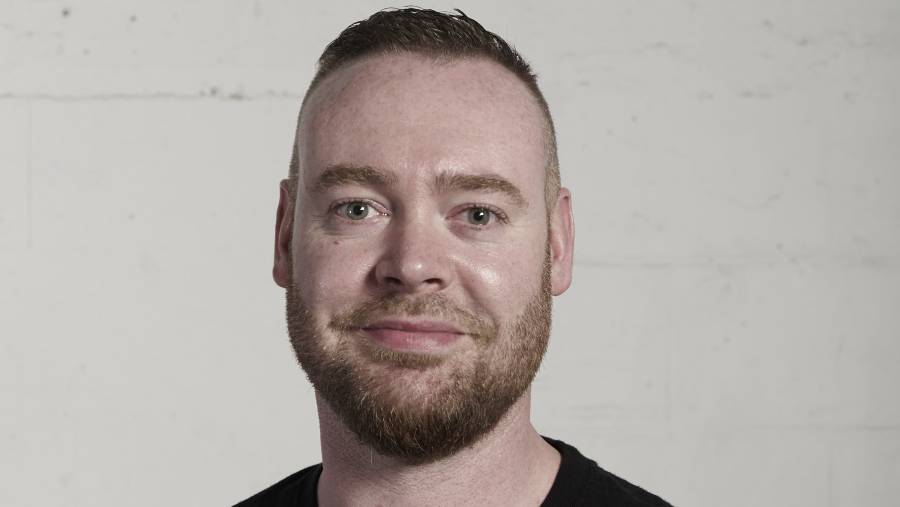
Dietrich Moens is the CEO and
co-founder of Spacehuntr.
Following a reconsideration of his professional ambitions and having previously flirted with entrepreneurship, he decided to take the leap in 2018 to establish Spacehuntr.
Spacehuntr is a fully integrated 360° platform that enables businesses to book and manage Work, Play, and Stay spaces.


