





In the early 1980s, British Inventor Sir Clive Sinclair revolutionised the consumer technology industry with the launch of the ZX Spectrum – a more developed version of his original (and the first) home computer, the ZX80. Utilising sounds and colours, the new technology set in action an army of British bedroom coders, who began creating their own games for the console. This was the birth of the UK computing industry and Britain was leading the way.
 |
Get our essential weekday HR news and updates.
|

Thirty years on, technology and society have become intrinsically intertwined. Computer based technology underpins everything we do, from work to play, and the goods coming out of this market are becoming those highest demand in modern society. The requirement for new technologies to make our lives easier
is unlikely to waver as society develops – making the IT industry integral to the growth of the economy and subsequently, a sensible career choice.
Despite a healthy start, Britain’s influence in the computing and programming industry has subsided since the early days of Sir Clive Sinclair and the bedroom programmers. A much debated issue, many question whether the industry suffers from a skills shortage, recent research from the Recruitment Research Federation (REC) found the number of students taking up GCSE IT dropping by almost 50% since 2006. The IT and Telecoms industry currently contributes £81b to the economy. However, a report from e-skills, the sector Skills Council for Business and Information Technology, has suggested investment in the industry could boost the economy by £50m over the next 5 to 7 years.

The basics of Information Communication Technology (ICT) are taught in schools but this primarily involves learning how to use everyday computer programmes such as Word and Excel. An encouragement of tech creativity coupled with programming skills, such as Java and C#, are often only accessible from A-level
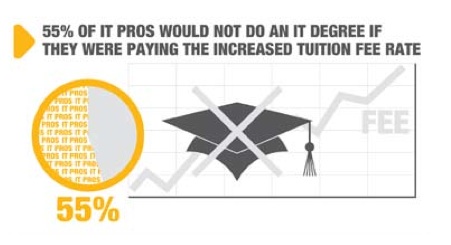
upwards. However, with the increase in tuition fees set to come into force for degree courses next year, there’s growing concern that the UK’s place in the IT market will weaken further. Research recently conducted by CWJobs has found that over half of IT professionals would not do an IT-related degree today if they were paying the increased fees.
Educating children on the basics of programming at a grass roots level could have an instrumental effect on the IT industry in the long term. It could encourage more people into the industry and given that children are far more adept at using computers in modern society, getting a head start from a young age could significantly boost their achievements.
The majority of ICT teachers in the UK (81%) do not possess a relevant qualification to teach the subject, suggesting that young people do not have the support to develop their skills at curriculum level, even if they would like to.
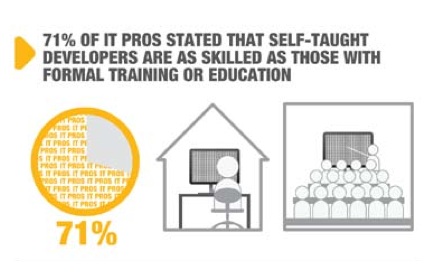
Our findings would suggest that even degree level education could be improved. When questioned on the value of an IT degree, 45% of IT professionals said they felt even a degree in computing is no longer valuable for securing a career in IT and 71% stated that self-taught developers are just as skilled as those with formal training or education.
A cultural shift to change the perception among young people and make IT a more appreciated career choice is also much needed. Quite often, despite using the Internet, playing video games and using mobile devices on a routine basis, many teens do not make the connection between these activities and IT. Recently released research from the Recruitment Employment Confederation, supports this. The REC research established evidence of a growing skills shortage the IT industry and suggested recruitment consultancies should work closely with schools, colleges and employers to help paint a more positive picture of IT careers to help boost numbers entering the industry.
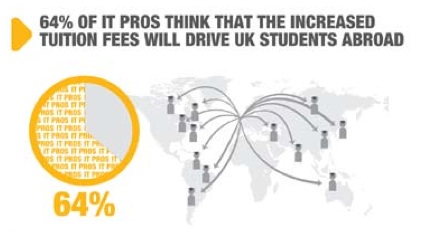
Respondents (64%) to the CWJobs survey expressed a concern that the negative impact of increased tuition fees will drive UK students abroad. Recent reports have suggested that the number of UK students applying to take the SATs – a test used by many US colleges to grant entry – has increased by over
a third in the last two years as students consider alternative routes to qualifications. Research released in 2011 from Mintel has established that only one in four students return home after completing their education – raising concerns that if students are forced to move abroad to study, the UK might lose its talent to overseas markets for good.
Time to take action
As technology advances a natural increase in demand for IT candidates will follow. Greater support needs to be introduced at a grass roots level, to educate children, not just on the technicalities of computer science itself, but on the possibilities a career in IT could bring. Instead, the UK seems to have lost its excitement about IT, perhaps as a result of technology becoming so engrained in society we take it for granted. However, given the huge potential for consistent growth, unique to this industry, coupled with the current gloomy state of the domestic market, addressing the current issues with ICT education in the UK would be a strategic place to start.


Pamela Flores is an events professional with experience at Symposium Events, a UK-based conference and events organization. She has worked in editorial and event coordination roles within the HR and expatriate management sector, contributing to the organization of major conferences including the Expatriate Management and Global Mobility conference. Her background spans online editorial work and events management within the professional conference industry.
- Pamela Flores

- Pamela Flores

- Pamela Flores

- Pamela Flores





